-
E-mail
mike@sgnprocess.com
-
Phone
13681679740
-
Address
900 Zhudai Road, Jiading District, Shanghai
Product Categories
Shanghai Sijun Machinery Equipment Co., Ltd


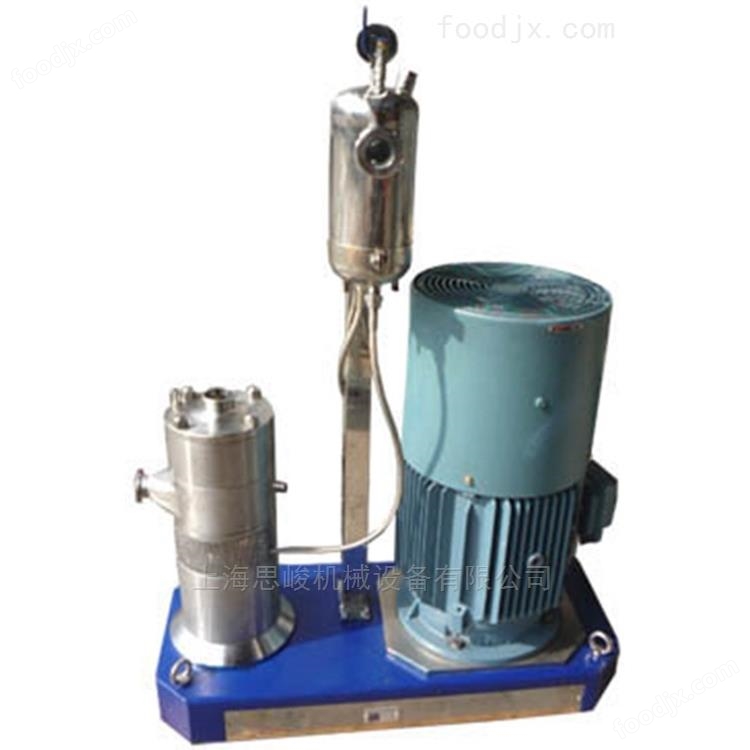
Silicon carbon composite negative electrode material disperser
NegotiableUpdate on 01/06
- Model
- Nature of the Manufacturer
- Producers
- Product Category
- Place of Origin
Overview
Silicon carbon composite negative electrode material disperser $r $n Japanese companies are at the forefront of silicon carbon composite negative electrode materials, and some companies already have a small supply of products. At present, this type of product is not specifically used in commercial batteries, but is mixed with graphite negative electrodes in a certain proportion, mainly used in the 3C field rather than power batteries.
Product Details
Silicon carbon composite negative electrode material disperserSilicon carbon composite negative electrode material
The characteristic of Si is its high lithium storage capacity. The silicon carbon composite negative electrode material adopts a "core shell" structure, which is based on spherical artificial or natural graphite, with a layer of Si nanoparticles nailed to the graphite surface, and then coated with an amorphous carbon layer on its surface. The mechanism of this design is that the volume expansion of Si is jointly borne by graphite and amorphous coating layer, effectively avoiding the powdering of negative electrode material due to huge volume changes and stress during lithium insertion and removal process. The disadvantage of silicon carbon composite negative electrode materials lies in their poor safety and rate performance. The alloying mechanism of two-phase separation makes it difficult to generate rapid lithium ion migration channels, which will inevitably result in significant capacity loss and safety hazards under high rate charging and discharging conditions. At the same time, Si based alloys also have the problem of high cost. The price of nano Si is extremely expensive, especially for silicon with a size less than 50nm, which makes the cost of silicon carbon composite negative electrode materials relatively high. The complete cost of a Japanese company's product is about $50/Kg. In addition, the Coulombic efficiency of this material is relatively low, and its compatibility with conventional electrolytes also needs to be improved.
Japanese companies are at the forefront of silicon carbon composite negative electrode materials, and some companies already have a small supply of products. At present, this type of product is not specifically used in commercial batteries, but is mixed with graphite negative electrodes in a certain proportion, mainly used in the 3C field rather than power batteries.
The high rotational speed and shear rate of the high-speed disperser are crucial for obtaining ultrafine suspensions. According to some industry specific requirements, Yiken Company has developed the GRS2000 ultra high speed disperser based on the GR2000 series. Its shear rate can exceed 100.00 rpm, and the rotor speed can reach 40m/s. Within this speed range, turbulence caused by shear forces combined with specially developed motors can reduce the particle size range to the nanometer level. The shear force is stronger and the particle size distribution is narrower. Due to its high energy density, no other auxiliary dispersion equipment is required.
The factors that affect the dispersion and emulsification results are as follows
1 The form of emulsion head (batch and continuous) (continuous is better than batch)
2 The shear rate of the emulsifying head (the higher, the better the effect)
3 The tooth structure of the emulsifying head (divided into initial teeth, middle teeth, fine teeth, ultra-fine teeth, with fine teeth having better effect)
4 The residence time of materials in dispersed walls, emulsification dispersion time (can be regarded as the same motor, the smaller the flow rate, the better the effect)
5 The more cycles (the better the effect, but by the end of the device's lifespan, it cannot be any better)
Calculation of linear velocity
The definition of shear rate is the relative velocity of the liquid layer between two surfaces.
–Shear rate(s-1) =vSpeed(m/s)
gfixed-Rotor spacing(m)
As can be seen from the above, the shear rate depends on the following factors:
–Linear velocity of rotor
–In this situation, the distance between the two surfaces is the rotor-Stator spacing.
fixed-The spacing range of the rotor is0.2 ~ 0.4 mm
rateV= 3.14 X D(rotor diameter)XRotational speedRPM / 60
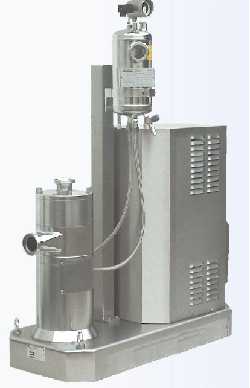
The high rotational speed and shear rate of the ultra high speed disperser are crucial for obtaining ultrafine suspensions. According to some industry specific requirements, Sijun Company has developed the GRX2000 ultra high speed shearing emulsifier machine based on the GRS2000 series. Its shear rate can exceed 200.00 rpm, and the rotor speed can reach 66m/s. Within this speed range, turbulence caused by shear forces combined with specially developed motors can reduce the particle size range to the nanometer level. The shear force is stronger, and the particle size distribution of lotion is narrower. Due to its high energy density, it can achieve the particle size of a regular high-pressure homogenizer at a pressure of 400BAR without the need for other auxiliary dispersing equipment
A high-speed disperser is a device that efficiently, quickly, and uniformly transfers one or more phases (liquid, solid) into another immiscible continuous phase (usually liquid). When the fineness of one or more materials reaches the micrometer or even nanometer level, the system can be considered homogeneous. When external energy is input, the two materials recombine into a homogeneous phase.High shear homogenizerDue to the strong kinetic energy brought by the high tangent speed and high-frequency mechanical effect generated by the high-speed rotation of the rotor, the materials are subjected to strong mechanical and hydraulic shearing, centrifugal extrusion, liquid layer friction, impact tear and turbulence in the narrow gap between the stator and rotor, forming suspension (solid/liquid), lotion (liquid/liquid) and foam (gas/liquid). The high shear homogenizer instantly disperses and emulsifies immiscible solid, liquid, and gas phases uniformly and finely under the combined action of corresponding processes and appropriate additives, and then passes through high-frequency processingPipeline type high shear dispersion homogenizer emulsifierThe cycle repeats itself, ultimately resulting in stable high-quality products.
The ultra high speed disperser is applied to: |
 |
Ultra high speed dispersers are particularly suitable for: suspension |
Ultra high speed disperserEquipment level: chemical grade, hygiene level I, hygiene level II, sterile grade
Ultra high speed disperserMotor form: ordinary motor, variable frequency speed regulation motor, explosion-proof motor, variable frequency explosion-proof motor, pneumatic motor
Ultra high speed disperserPower supply selection: 380V/50HZ, 220V/60HZ, 440V/50HZ
Ultra high speed disperserMaterial: SUS304 SUS316L 、SUS316Ti
Ultra high speed disperserSurface treatment: polishing, wear-resistant treatment
Ultra high speed disperserImport and export connection forms: flange, screw, clamp
Silicon carbon composite negative electrode material disperser
|
Ultra high speed disperser |
Standard flow rate (H2O) |
output speed |
Standard linear velocity |
Motor power |
import and export dimensions |
model |
l/h |
rpm |
m/s |
kW |
|
GRX 2000/4 |
700 |
20000 |
66 |
2.2 |
DN25/DN15 |
GRX 2000/5 |
1,500 |
15,750 |
66 |
7.5 |
DN40 /DN 32 |
GRX 2000/10 |
5,000 |
10,950 |
66 |
22 |
DN50 / DN50 |
GRX 2000/20 |
10,000 |
7,300 |
66 |
37 |
DN80 /DN 65 |
GRX 2000/30 |
30,000 |
4,000 |
66 |
75 |
DN150 /DN 125 |
GRX 2000/50 |
50,000 |
3,000 |
66 |
160 |
DN200 /DN 150 |
The upper limit processing capacity in Table 1 refers to the measurement data of the medium being "water".
The processing capacity depends on the viscosity, consistency, and final product requirements of the material.
The flow rates of various models within the 3 parameters mainly depend on the precision of the configured emulsifying head.
Similar Product Recommend