-
E-mail
kunhoujc@163.com
-
Phone
18126732791
-
Address
10-1307, Hejin Industrial Park, No. 895 Asian Games Avenue, Panyu District, Guangzhou City
Product Categories
Guangzhou Kunhou Testing Technology Co., Ltd
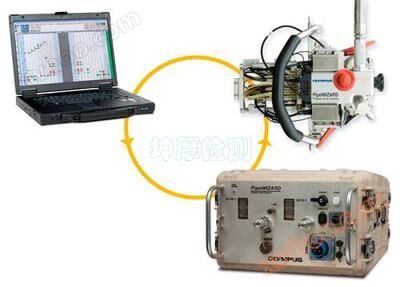
PipeWIZARD Automatic Circular Weld Inspection System (AUT)
NegotiableUpdate on 03/17
- Model
- Nature of the Manufacturer
- Producers
- Product Category
- Place of Origin
Overview
The PipeWIZARD circumferential weld inspection system is an automatic circumferential weld inspection system (AUT) that uses phased array and conventional ultrasonic technology
Product Details
Circumferential weld detection system
PipeWIZARD is an automatic circumferential weld inspection system (AUT) that uses phased array and conventional ultrasonic technology. This device is specifically designed for on-site weld to weld inspection in extreme environments on land and at sea.
Underground or submarine pipelines transport large amounts of natural gas, oil, water, and other chemicals, playing a crucial role in the global economy. Pipelines are usually connected in a circular welding manner using an automatic welding system on site. During the pipeline construction process, defects often occur at the weld seam, making it a "weak point" on the pipeline. Non destructive testing and painting of pipeline welds are required before burying them underground or placing them on the seabed. Due to strict requirements for the construction period, rapid defect detection and analysis of welds are necessary.
Automated Ultrasonic Testing (AUT)

In recent years, automatic ultrasonic testing (AUT) technology has begun to replace traditional radiographic imaging and become the world's preferred method for pipeline weld detection. Radiographic imaging technology has obvious limitations: poor performance in detecting surface defects, lack of vertical quantitative defects, and potential safety and environmental pollution hazards.
The advantages of automatic ultrasonic testing:
No radiation hazards, no chemical pollution, and no need for permission.
The detection cycle is extremely short, which improves productivity.
The detection and quantification accuracy is higher, reducing the defect rate.
The use of Engineering Critical Assessment (ECA) acceptance criteria to measure the vertical height and depth of defect indications has reduced the defect rate.
Real time analysis through intelligent output display.
Provide data and testing reports related to electronic support.
Better control of the welding process has reduced the defect rate.
Phased array technology
Early automatic ultrasound detection systems used multi probe systems with multiple conventional ultrasound probes for detection. Ten years ago, phased array systems were introduced. Phased array technology uses the principle of electronically controlled beam shaping to generate and receive ultrasonic waves. Phased array technology delays the emission of excitation pulses for each chip in the array, thereby creating many beam angles and focusing distances.
Phased array technology has more advantages compared to conventional multi probe systems:
Generally speaking, two phased array probes can replace at least 24 conventional probes.
Phased array settings work by importing files without the need to adjust the position of each probe separately.
By setting appropriate parameters in the software, the angle, focus, UT sound path, and beam width of the phased array sound beam were optimized, thereby improving the accuracy of quantification.
Compared to equivalent conventional multi probe systems, phased array systems have 80% fewer moving parts, thereby improving the stability of the scanning process and the reliability of the detection results.
Compared to conventional multi probe scanners, phased array scanners are smaller in size and lighter in weight. Therefore, phased array scanners are easier to operate and reduce the wear of coatings on both sides of the weld seam.
Phased array systems can detect almost all types of weld structures, while conventional multi probe systems are limited by pipe wall thickness and pipe diameter.
By utilizing phased array electronic scanning technology, users can customize weld seam inspection, including multi angle TOFD, advanced imaging, high-resolution detection, and more.
Phased array:
Complete coverage only requires the use of 2 probes

Conventional UT technology:
Complete coverage requires the use of at least 24 probes

The figure shows the detection status of an area. Phased array technology uses one probe to simultaneously detect all areas.
Phased array technology uses probes placed on one side of the weld seam to cover the entire weld seam area.
Phased array technology uses probes placed on one side of the weld seam to cover the entire weld seam area.
The illustration shows the detection status of an area. Using conventional UT technology, multiple probes are required to cover all areas.
comply with standards
In 1998, ASTM (American Society for Testing and Materials) released the E-1961-98 specification (re approved in 2003). This specification covers the main aspects of automatic ultrasonic testing of circumferential welds, including zoning, rapid data interpretation, specialized calibration blocks, and configuration steps. The purpose of the E-1961 specification is for engineering criticality assessment (ECA). In 1999, the American Petroleum Institute (API) released the 19th edition of the 1104 standard, which involved mechanical ultrasonic testing and imaging technology testing of circumferential welds.
The tests conducted using PipeWIZARD all comply with ASTM E-1961 standard, and it can be inferred that they also comply with API 1104 standard. In addition, these tests also comply with the maritime automatic ultrasonic testing specification: DNV-OS-F101 standard.
The company's technical indicators may exceed these specifications, usually to improve quantitative accuracy or achieve better resolution.
PipeWIZARD Experience
One important goal of designing the PipeWIZARD system is to operate it in extremely harsh environments. Whether in the cold Siberian region, the hot Middle Eastern desert, or in humid, salty, or arid working environments, the PipeWIZARD system can operate well. Extensive testing has been conducted on the PipeWIZARD system to ensure its ability to resist vibration, impact, and electromagnetic interference.
The PipeWIZARD system is suitable for detecting circumferential welds in various structures:
Various types of weld grooveCRC Evans groove, J-shaped groove, V-shaped groove, double V-shaped groove, X-shaped groove, etc.
Typical pipeline wall thickness6 millimeters (0.25 inches) to over 35 millimeters (1.4 inches)
There are also options for thicker pipe walls.Typical pipeline diameter: 152 millimeters (6 inches) to over 1422 millimeters (56 inches)
There are also options for smaller pipe diameters.pipeline materialStandard carbon steel materials, as well as complex material configurations such as various wall thicknesses of chromium nickel iron alloys, coated pipes, seamless pipes, etc.
The typical defects detected are lack of fusion, lack of penetration, porosity, weld through, undercutting, low height, cracks, cold insulation, inclusions, etc.
The time required for the inspection cycle varies from 2 minutes to 6 minutes depending on factors such as weld type, pipeline diameter, location, and environment.
Summary of PipeWIZARD Application Status
The PipeWIZARD phased array system is used in the world's largest onshore and offshore pipeline laying projects.
The PipeWIZARD system has inspected over one million weld seams.
-
Major oil and gas companies have recognized the use of the PipeWIZARD system in pipeline laying projects
ExxonMobil (ExxonMobil)
Shell (Shell)
TOTAL (Total)
BP (British Petroleum)
Chevron
Eni
Petrobras (Petrobras)
Gazprom (Russian natural gas)
Hundreds of operators around the world have received training on the PipeWIZARD system.
Partition detection technology

The main technology of the PipeWIZARD system is zone detection technology, which means that each different area of the weld seam is detected by different ultrasonic beams. The overall height of the area is approximately equivalent to the length of the weld bead.

There is a phased array probe placed on each side of the weld seam to ensure complete coverage of the weld groove area and the entire weld volume area. According to the detected area, pulse echo configuration or send receive ("one send, one receive") configuration can be selected. These phased array channels are displayed in a strip chart format.
In addition, the Time of Diffraction (TOFD) technique is used to improve the detection and quantification of small or directional defect indications. This technique is also used to determine defect indications detected in the strip chart channel. TOFD data can be provided by phased array probes or specialized conventional probes.

The optional transverse module comes with 4 dedicated conventional probes that can detect transverse defects in the weld seam.
During the process of scanning weld seams and calibrating test blocks, different channels will appear on the screen to monitor the coupling of each phased array probe separately.
Each type of weld structure requires a calibration block specifically designed for that type of weld, which must have the same diameter, thickness, and material as the pipeline. The reflectors in the test block are all machined according to specific specifications, representing typical defects that often occur during the welding process. All sound beams are calibrated according to the detection program.
User friendly advanced software
The PipeWIZARD V4 software is based on the powerful TomoView data acquisition and analysis software that has been field validated. This software has the functions of easy and automatic creation of settings, multiple data analysis tools (including 2D views), easy report creation, and advanced weld seam detection. The purpose of designing PipeWIZARD V4 software is to provide a simple, flexible, and upgradable software for more complex detection configurations. The optimized user interface allows for quick training and efficient on-site operations. The operators of the AUT system can operate the PWZ V4.0 software after a short period of training.
The PipeWIZARD V4 software is based on the Tomoview platform. In the process of software development, this Tomoview software is often used as a reference. This also means that software upgrades can be easily completed even in the workplace.
Automatic creation of settings

Operators can create settings offline, that is, they do not create settings in the instrument. Within a few minutes, the settings file can be saved and sent to any work site via email, and then the on-site operators only need to calibrate the system.
The setup includes not only standard strip chart channels and single focus B-scan views (TOFD, weld volume, and weld root imaging), but also newly added sector and linear scanning channels. This new performance has the potential to improve defect detection and quantification, and is highly likely to greatly exceed the requirements of any partition specification in terms of detection and quantification effectiveness.
Calibration and testing

During the sequence detection process, the collected data will be displayed in real-time. The data file name will automatically increment.
When using the TomoScan FOCUS LT acquisition unit, the PipeWIZARD V4 software has increased data processing capacity compared to previous acquisition units (4 MB/s compared to 0.7 MB/s). This not only allows for the collection of complete data from compressed A-scans, but also enables the execution of multiple settings simultaneously when the scanning speed reaches 100 mm/s.
Quick and detailed analysis
The PipeWIZARD software can provide an almost infinite number of channels in 10 separate layouts. This software automatically interprets data by displaying defects and their surrounding positions on the weld profile.

There are many analysis tools that can help operators quantify and locate defect indications:
Double gates in the strip chart
Weld seam coverage for fan-shaped scanning and linear scanning (see figure below)
Magnification function
View link
Custom View
automatic measurement
Accumulation measurement of defect indication
C-scan fusion function
Customizable color palette
Automatically generate reports

The PipeWIZARD software has the function of automatically generating reports. The report content can be defined by oneself, including project name, scan date and time, weld ID, operator name, complete scan view, weld groove graphic with inspection area information, and defect report with identification code, length, height, position in the weld, weld status, and operator comments.
Simple data storage
All data files can be stored on any external hard drive storage device or archived on CD/DVD drives for future reference. The function of automatically mirroring and backing up data increases the security performance of the data. Data files can be easily transferred to other places through the Internet.
PipeWIZARD VIEWER
PipeWIZARD VIEWER is a free software for observing phased array and ultrasound data. This software has the capability to load data files generated by PipeWIZARD V4 software. This software is very useful for third-party or end users who need to review and scan. The PipeWIZARD VIEWER software can run on Microsoft Windows XP Pro, Microsoft Windows Vista, and Microsoft Windows 7 with SP2.
Advanced applications
The PipeWIZARD system has a wide range of applications, including detecting special weld structures and other applications.
Clad pipelineThe PipeWIZARD software, with its longitudinal wave function and other advanced features, utilizes special detection techniques to inspect clad pipelines.
Seamless pipelineThe PipeWIZARD software utilizes a unique detection technology that has been developed and recognized to detect welds in pipes of various wall thicknesses.
Thick walled pipelineThe PipeWIZARD system utilizes different probes and wedges to detect welds in thick walled pipelines with minimal mechanical correction.
PipeWIZARD equipment

Scanner
The PipeWIZARD scanner is a compact, sturdy, and field validated scanner that can perform stable and repeatable scans.
The design of the scanner head meets the IP66 rating standard and is equipped with a drive motor, an encoder, two phased array probes and wedges, two TOFD probes and wedges, and a temperature sensor.
A heavy-duty umbilical cable contains all necessary cables, including water pipes for coupling.
Computers and Software
The sturdy and durable laptop is equipped with Microsoft Windows and PipeWIZARD data acquisition and analysis software. The software suite includes TomoView and advanced calculator software, Microsoft Office software, and all necessary software accessories.
computer case
The main chassis has a small volume but is stable and sturdy, and its design meets the IP64 rating standard. This heavy-duty chassis is equipped with TomoScan FOCUS LT unit and PWZ-MCDU unit. The front cover is equipped with a heat exchanger and built-in shock absorbers for protecting the equipment. The external power socket on its wiring panel can connect various accessories.
collection unit
The TomoScan FOCUS LT 64:128 acquisition unit can provide up to 64 focusing channels and 128 P/R, and can combine phased array probes and conventional probes in multiple ways.
Motor controller and drive unit
PWZ-MCDU drives a DC servo motor using an Ethernet link.
Similar Product Recommend