-
E-mail
kunhoujc@163.com
-
Phone
18126732791
-
Address
10-1307, Hejin Industrial Park, No. 895 Asian Games Avenue, Panyu District, Guangzhou City
Product Categories
Guangzhou Kunhou Testing Technology Co., Ltd
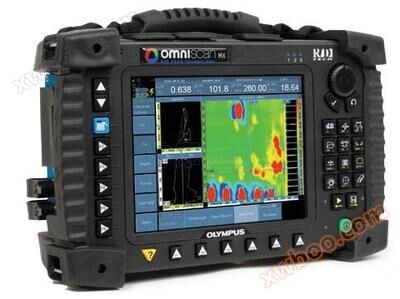
OmniScan MX ECA/ECT Eddy Current Array Flaw Detector
NegotiableUpdate on 03/17
- Model
- Nature of the Manufacturer
- Producers
- Product Category
- Place of Origin
Overview
OmniScan MXECA is used for eddy current array testing
Product Details
OmniScan MX ECA
Used for conducting eddy current array testing. Its detection configuration supports 32 sensor coils (64 coils can be supported using an external multiplexer), and its working mode can be bridge or transmit receive. Its operating frequency range is from 20 Hz to 6 MHz, with an option to use multiple frequencies during the same acquisition operation.
Eddy current array detection
Eddy current array technology
Eddy current array technology (ECA) electronically drives multiple adjacent eddy current induction coils in the same probe and interprets signals from these induction coils. By using multi-channel technology to collect data, mutual inductance between different coils can be avoided.
OmniScan ® The ECA detection configuration can support 32 induction coils in bridge or transmit receive mode (up to 64 induction coils can be supported using an external multiplexer). The operating frequency range is 20 Hz to 6 MHz, and multiple frequencies can be selected to be used in the same sampling set.
Advantages of Eddy Current Array
Compared with single channel eddy current technology, eddy current array technology has the following advantages:
The detection time has been significantly reduced.
A single scan covers a larger detection area.
Reduced the complexity of mechanical and automatic scanning systems.
Provide real-time images of the detection area for easy data interpretation.
Extremely suitable for detecting components with complex geometric shapes.
Improved the reliability and detection rate (POD) of the detection.
Eddy current array probe
R/D Tech manufactured by Olympus NDT ® ECA probes can be applied in a wide range of fields. According to the different types of defects or the shape of the tested workpiece, different probes can be designed. Standard probes can detect defects such as cracks, pitting, and near surface defects such as cracks and corrosion in multi-layer structures.
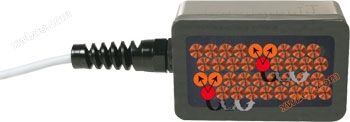
Multi channel conversion technology between sensors.
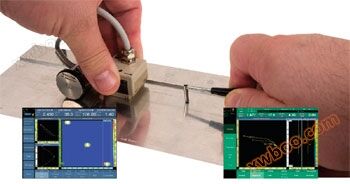
The eddy current array probe can eliminate one axis in the two axis scanning, making the eddy current setting more flexible.
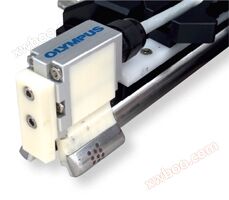
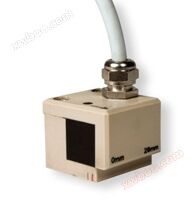
The probe can be made in different shapes and sizes to better adapt to the shape of the detection component.
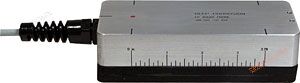
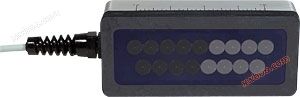
The transmitter receiver probe used for corrosion detection can detect a depth of 6 millimeters (0.25 inches) in aluminum materials.
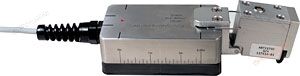
A transmitting receiving probe for surface crack detection and an optional encoding.
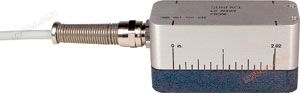
Absolute probe for surface crack detection.
Eddy current array software
Simple data collection and analysis display
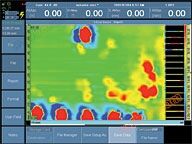
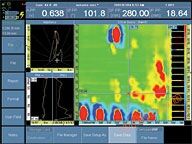
The data collection in C-scan view can quickly and effectively detect defects.
The data selection in analysis mode can be viewed in impedance and strip plots.
Measurement of wave amplitude, phase, and position.
Adjustable color palette.
Large scale impedance plan and strip view, compatible with conventional single channel ECT probe detection.
Calibration Wizard
Step by step.
All channels in a group can be calibrated simultaneously, with each channel having its own gain and rotation.
The amplitude and phase can be set according to different reference defects.
call the police
Three alarm outputs can combine indicator lights, buzzers, and TTL outputs together.
Different alarm zone shapes (fan-shaped, rectangular, circular, etc.) can be defined in the impedance diagram.
Automatic probe recognition and configuration
After the probe is connected, the C-scan parameters and the order of the multiplexer can be automatically set.
Frequency range protection can prevent damage to the probe.
Differential tool in analysis mode
This function can remove lift off variations between adjacent channels.
Advanced real-time data processing
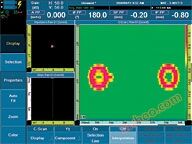
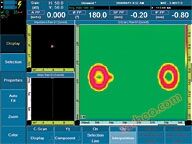
Real time data interpolation can improve the spatial display of defects.
By using two frequencies, a MIX signal can be generated to remove interference signals (such as lift off, fastener signals, etc.).
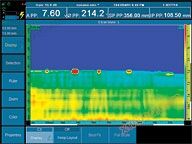
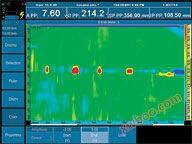
High pass, low-pass, median, and average filters can be used for data processing. The following image shows an application example: cracks are detected at the edge of the overlap because there is a sharp change in thickness at that location. The filtered data can improve detection performance, especially for small cracks.
| Technical specifications of eddy current module | |
| Overall dimensions (Width x Height x Thickness) |
244mm x 182mm x 57mm (9.6 inches x 7.1 inches x 2.1 inches) |
| weight | 1.2 kilograms (2.6 pounds) |
| interface | 1 OmniScan ® Eddy current array probe interface 1 19 needle Fischer ® Eddy current probe interface 1 BNC interface |
| number of channels | 32 channels with built-in multiplexer |
| Probe recognition | Automatic probe recognition and setting |
| generator | |
| Number of generators | 1 (with built-in electronic reference) |
| Maximum Voltage | 12vp-p, 10. Omega.. |
| operating frequency | 20 Hz~6 MHz |
| bandwidth | 8 Hz to 5 kHz (in a single coil). Simultaneously, the gap forms an inverse proportional relationship and is set in multi-channel mode through the instrument. |
| receiver | |
| Number of receivers | 1 to 4 |
| Maximum input signal | 1 Vp-p |
| gain | 28 dB~68 dB |
| Built in multiplexer | |
| Number of generators | 32 (4 generators working simultaneously for 8 time slots; up to 64 when using an external multiplexer) |
| Maximum Voltage | 12vp-p, 50. Omega.. |
| Number of receivers | 4 differential receivers (each with 8 time slots) |
| Maximum input signal | 1 Vp-p |
| data collection | |
| Digital frequency | 40 MHz |
| Collection rate | 1 Hz to 15 kHz (in a single coil). The rate can be limited by the processing capacity of the instrument or by the delay setting of multiple excitation modes. |
| A/D resolution | 16 bits |
| data processing | |
| Phase rotation | 0 °~360 °, with a step distance of 0.1 ° |
| filtering | FIR low-pass, FIR high pass, FIR band-pass, FIR bandstop (with adjustable cutoff frequency), median filter (varying between 2 and 200 points), average filter (varying between 2 and 200 points) |
| Channel processing | mix |
| data storage | |
| Maximum file capacity | Depending on internal flash space: 180 MB (or 300 MB, optional) |
| data synchronization | |
| According to the internal clock | 1 Hz to 15 kHz (single coil) |
| External walking speed | have |
| Press the encoder | Uniaxial or biaxial |
| alarm | |
| Number of alarm devices | 3 of them |
| Alarm area shape | Fan shaped, inverted fan shaped, frame shaped, inverted frame shaped, and ring shaped |
| output type | Video, audio, and TTL signals |
| analog output | 1 (X or Y) |
Similar Product Recommend