-
E-mail
ddxfvgdwm@163.com
-
Phone
13202009968
-
Address
No. 8 Lvyuan Avenue, Xinfeng Industrial Park, Ganzhou City, Jiangxi Province
Product Categories
Ganzhou Big Brother Cutting Tools Co., Ltd

cross-cutting knife
NegotiableUpdate on 02/09
- Model
- Nature of the Manufacturer
- Producers
- Product Category
- Place of Origin
Overview
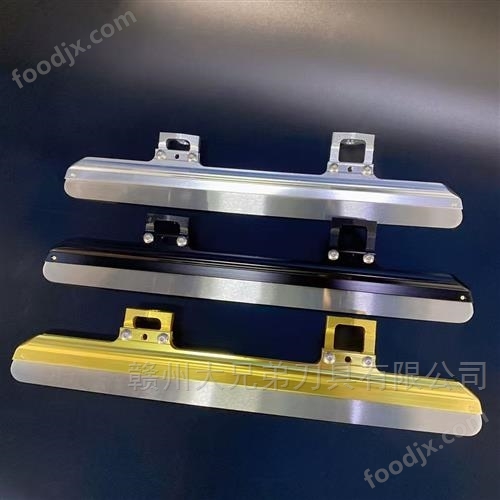
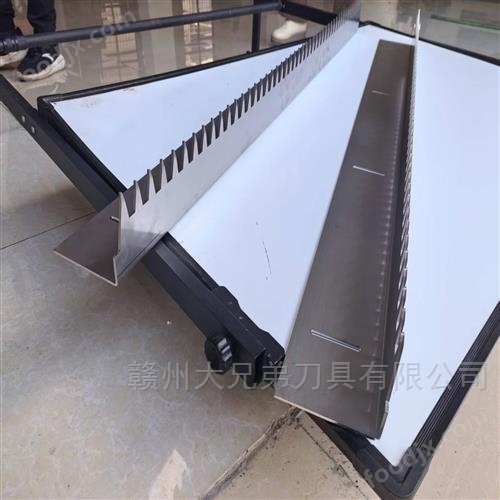
The cross cutting knife on the packaging machine is a crucial component in the packaging production line. Its main function is to precisely cut the continuously moving roll packaging materials (such as film, paper, aluminum foil, composite film, etc.) in a predetermined position to form a single packaging bag or determine the length of the packaging unit.
Product Details
Explanation and Introduction:
On the packaging machineCross cutting knife**It is a crucial component in the packaging production line, whose main function is to precisely cut the continuously moving roll packaging materials (such as film, paper, aluminum foil, composite film, etc.) in a predetermined position to form a single packaging bag or determine the length of the packaging unit.
1. Cross cutting knifeCore functions:*
Fixed length cutting:**Cut the material at the correct position according to the preset packaging length.
*Forming packaging units: Dividing continuous rolls into individual bags, labels, sheets, etc.
** * Ensure incision quality: * * The incision needs to be flat, smooth, and free of burrs, which directly affects the appearance, sealing quality, and user experience of the product.
*Synchronize with the machine: The cutting action must be synchronized with the movement speed and position height of the packaging material to ensure accurate cutting points.
2. * * Basic structure and working principle:**
*Blade: It is usually used in pairs.
**Moving knife: * * Installed on a rotating knife holder or reciprocating knife holder, responsible for performing cutting actions.
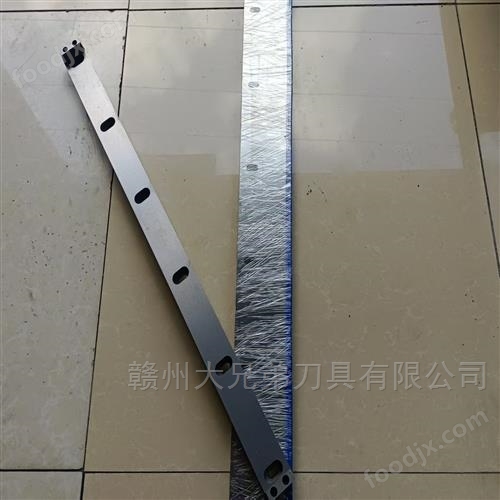
*Fixed knife: fixedly installed on the machine frame as a support for the moving knife and a cutting board. The moving blade and the fixed blade need to be closely matched to form a shear force.
*Knife holder/holder: carries the moving knife and rotates or reciprocates it through a driving mechanism (such as servo motor, cam, cylinder, crank connecting rod).
*Drive mechanism:
*Mechanical drive (cam/crank): Traditional methods have relatively simple structures, limited speed, and may be difficult to adjust length.
** * Servo motor drive: * * Modern high-speed packaging machine. Through a precise servo control system, high synchronization accuracy, flexible cutting length adjustment, complex cutting trajectories (such as follow-up cutting), and smooth operation with low noise can be achieved.
*Adjustment mechanism: used to adjust blade clearance, cutting phase (relative to material position), cutting length (set by program in servo system), etc.
*Detection system: Usually used in conjunction with photoelectric eyes or encoders to detect color codes or material positions on packaging materials, trigger cutting signals, and ensure the accuracy of cutting positions.
3. Main types:
*Rotating type:
*The moving blade is installed on a high-speed rotating blade roller.
*Usually combined with a fixed blade (which may also be curved) to form a continuous cutting action.
*Suitable for high-speed and continuous production scenarios.
*Reciprocating:
*The moving knife performs reciprocating motion on a straight or nearly straight track.
*Cutting is completed when the material is briefly stationary or at low speeds.
*Commonly used in low-speed packaging machines, pillow packaging machines, and situations where thick or hard materials need to be cut.
*Follow up cutting style:
*This is an advanced form of servo drive technology application. At the moment of cutting, the moving blade will actively match the running speed of the packaging material (synchronously), and quickly return to the starting point after completing the cutting. The entire process does not require any pause in the materials.
*The core configuration of high-speed automated packaging lines is the ability to achieve high production speed and seamless cutting.
4. Blade material and blade type:
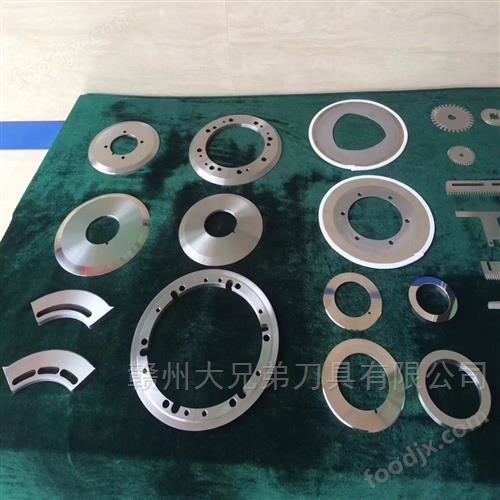
*Material: Requires high hardness and wear resistance. Common materials include:
*Tool steel
*High speed steel
*Hard alloy
*Ceramic coated blade
*Blade type:
*Flat blade: used for cutting ordinary films, paper, etc., with a smooth cut.
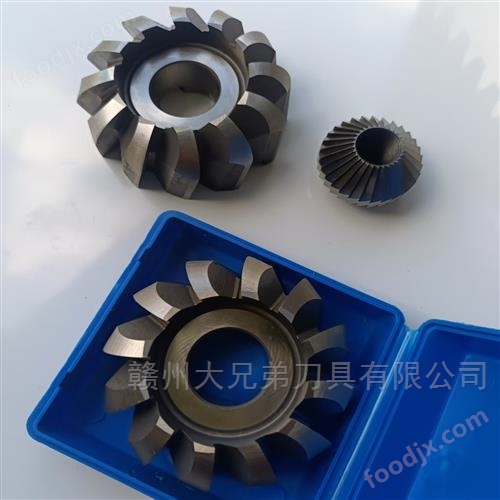
*Sawtooth blade: used for cutting materials that are prone to slipping (such as PE film containing lubricants), elastic materials (such as certain non-woven fabrics), or situations that require easy tearing.
*Special blade: such as wavy blade, used for specific needs.
5. * * Key performance indicators:
*Cutting accuracy: the range of error in cutting length.
*The quality of the incision is flat, smooth, and without adhesion.
*Speed: Maximum cutting speed (240 cuts/minute).
*Synchronization accuracy: the accuracy of matching tool speed with material speed.
*Reliability/lifespan: The wear resistance and service life of the blade.
*Adjustment convenience: the ease of replacing blades, adjusting clearances and lengths.
6. Common applications:
*Food packaging (candies, cookies, puffed foods, instant noodles, frozen foods)
*Packaging for daily chemical products (tissues, wet wipes, diapers)
*Medical packaging (medicine board, medical dressing)
*Industrial product packaging (hardware, electronic components)
*Label printing and die-cutting
*Soft packaging bag making (back sealed bag, three sided sealed bag, self-supporting bag, etc.)
7. Common problems and maintenance:
*Uneven incision: blade passivation, excessive or insufficient gap between cutting edges, broken cutting edges, material issues.
*Continuous cutting: The blade is too dull, the gap is too large, the pressure is insufficient, the material is too thick or too tough.
*Cutting/drawing: The blade is too sharp (sometimes), the gap is too small, and the material adheres to the blade edge.
*Inaccurate cutting points: synchronization issues (inaccurate color code detection, servo parameter deviation, mechanical transmission clearance), unstable material tension.
*Abnormal noise/vibration: loose blades, damaged bearings, dynamic balance issues, improper clearances.
*Maintenance points:
*Regularly clean the blade to prevent material debris and adhesive buildup.
*Regularly check the sharpness and wear of the blade, and promptly grind or replace it.
*Maintain the correct blade clearance (usually based on material thickness as a reference).
*Regularly lubricate moving parts.
*Check if the fasteners are loose.
The core executing component that determines packaging efficiency, accuracy, and final product quality. With the development of servo control technology, especially for the shearing type, high speed, high precision, and flexibility can be achieved. Choosing the appropriate blade type, maintaining its sharpness, ensuring correct installation and synchronized adjustment are crucial for the stable and efficient operation of the packaging line.