-
E-mail
ddxfvgdwm@163.com
-
Phone
13202009968
-
Address
No. 8 Lvyuan Avenue, Xinfeng Industrial Park, Ganzhou City, Jiangxi Province
Product Categories
Ganzhou Big Brother Cutting Tools Co., Ltd
Shield tunneling machine cutting tools
NegotiableUpdate on 02/22
- Model
- Nature of the Manufacturer
- Producers
- Product Category
- Place of Origin
Overview
The cutting tools of shield tunneling machines are the "sharp teeth" for conquering the underground world, and their design, selection, layout, management, and maintenance are the key technical links for the success of shield tunneling projects. Engineers must carefully select and configure cutting tools based on geological conditions, closely monitor their status during excavation, and replace them in a timely manner to ensure that shield tunneling machines can efficiently, safely, and economically complete tunnel excavation tasks. Continuously developing more wear-resistant, impact resistant, and intelligent cutting tools is an important direction for the development of shield tunneling technology.
Product Details
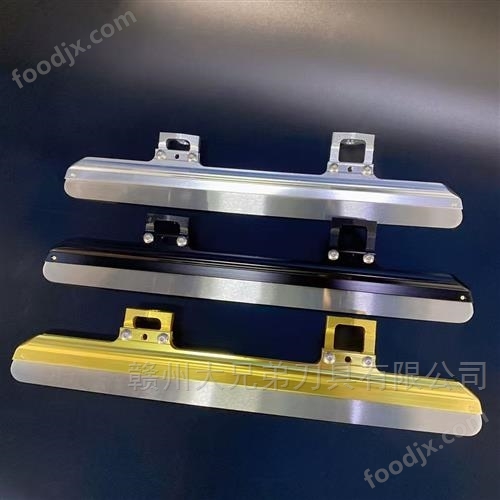
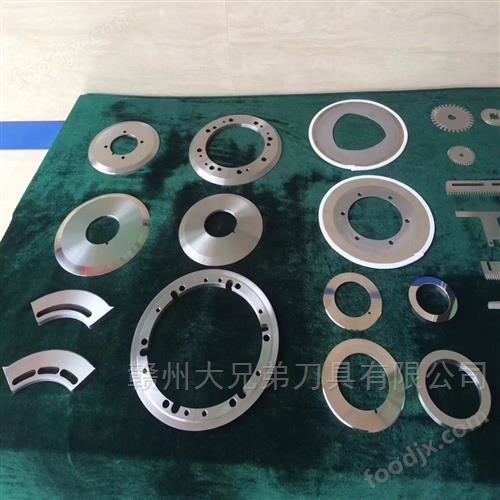
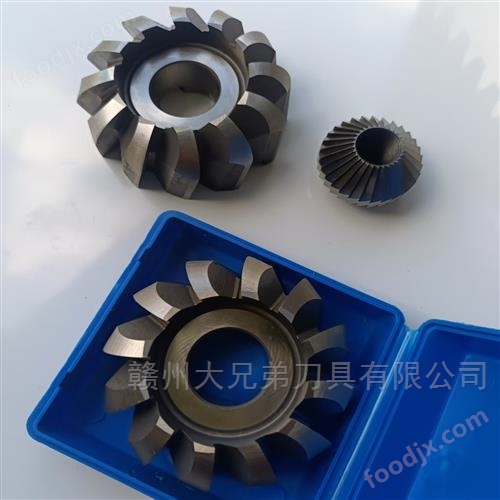
Shield tunneling machine cutting toolsIt is the core component of the shield tunneling system, directly responsible for cutting and crushing the soil or rock mass ahead, and is the key to whether the shield tunneling machine can excavate efficiently and safely. They are equivalent to shield tunneling machinesTeeth "
1 Main types (based on geological adaptability)
1. Roll cutter (disc-shaped roll cutter):
*Applicable strata: hard rock, medium hard rock, soft rock, and even some high-strength gravel layers. It is the main tool for breaking rocks.
*Working principle: The cutter ring (usually made of high-strength alloy steel) rolls freely on the cutter body, and is pressed into the rock mass by a huge shield tunneling force. The rock is cracked and broken (mainly by compression) through compression, shear, and tension.
*Characteristics
*High rock breaking efficiency, especially at high penetration rates.
*Wear relatively evenly and have a longer lifespan (compared to scrapers).
*Requires high thrust and torque.
*The effect is not good in soft soil, and it is easy to "wrap in mud" and cause failure due to inability to rotate.
*Subcategory:
*Single blade rolling cutter: the most common, with one cutting ring.
*Roller cutter: Two blade rings parallel, with stronger load-bearing capacity, used for extremely hard rocks or high wear formations.
*Central rolling cutter: installed in the central area of the cutter head, usually small in size or specially designed to accommodate low line speeds at the center.
*Positive rolling cutter: installed on the front of the spoke of the cutting disc, mainly responsible for rock breaking tasks.
*Edge rolling cutter: installed on the outer edge of the cutter head, responsible for excavating contour lines, sometimes designed with angles (such as conical edge rolling cutters) to form over excavation gaps.
*Diameter preserving rolling cutter: installed on the outer edge of the cutter head or cutter head shield, its main function is to protect the cutter head structure from wear and maintain the excavation diameter.
2. Scraper (cutter, toothed cutter):
*Applicable strata: soft soil layers such as clay, silt, sand, and silt, as well as some soft rocks and strongly weathered rocks.
Working principle: Using the cutting edge at the front end of the tool (usually embedded with hard alloy), scrape and peel off the soil layer like a shovel. Mainly relying on shear force to destroy soil.
*Characteristics:
*High cutting efficiency and relatively low resistance in soft soil.
*The structure is relatively simple.
*Directly exposed to the soil flow, it wears out very quickly and requires frequent inspection and replacement.
*It is highly prone to collapse and fracture failure in hard rocks or formations containing large gravel.
*Design: Usually designed with * * rear corner * * and * * side corner * * to facilitate slag discharge and reduce adhesion. Overloading protection structures (such as fracture grooves) are often designed on the blade body.
3. Advance knife:
*Applicable strata: Between the rolling cutter and scraper, commonly used in composite strata (uneven hardness) or soft soil strata containing pebbles and boulders.
*Working principle: Installed in front of the scraper (near the center of the cutterhead), protruding longer than the scraper. Its function is to pre crush or loosen large, hard obstacles (such as pebbles, boulders) or harder soil before the scraper contacts the soil, protecting the scraper behind and improving the flowability of the slag.
*Characteristics: Usually thicker and more wear-resistant than a scraper, with a variety of shapes (conical, horn shaped, tear shaped, etc.).
4. * * Imitation knife:**
*Function: It is not used for conventional excavation, but for over excavation required for tunnel turning or correction, to provide the space needed for shield machine turning.
*Location: Usually installed inside the expandable device on the outer edge of the cutter head.
*Operation: When overexcavation is required, the operator pushes it out from the cutterhead beyond the cutting contour of other tools. Retract after completing over excavation.
*Type: It can be in the form of a rolling cutter or a scraper.
II Key Features and Challenges
1. Wear resistance: The cutting tool directly rubs against highly abrasive soil, sand, and rock, requiring the use of high-strength alloy steel cutting bodies and superhard material cutting rings/blades (such as tungsten carbide hard alloys, steel bonded hard alloys, and even diamond composite sheets).
2. Excellent impact resistance: The formation is uneven and may encounter isolated rocks, obstacles, or hard rock interlayers. The cutting tool needs to withstand severe impact without fracture or severe chipping.
3. High temperature resistance: Cutting friction generates a large amount of heat, especially during hard rock excavation.
4. Geometric optimization: The installation angle, back angle, cutting angle, etc. of the tool directly affect cutting efficiency, wear rate, and slag removal effect.
5. Wear and Failure: Tool wear is a common and major cost in shield tunneling construction. The forms of failure include:
*Normal wear and tear: The blade/ring is evenly worn and worn.
*Broken blade/block: The edge of the hard alloy blade or cutting ring is shattered due to impact or fatigue.
*Fracture: The blade body or blade ring fractures due to overload or fatigue.
*Partial wear: Excessive wear on one side due to installation issues or uneven formation.
*Loose/detached knife ring: fixing failure.
*Bearing jamming: Sealing failure causes mud and sand to enter the roller bearing.
6. Tool management:
Status monitoring: Determine the tool wear status through excavation parameters (thrust, torque, speed, penetration, vibration, temperature), slag analysis (including metal debris), and regular cabin inspection (most directly).
*Replacement plan: Develop a tool inspection and replacement plan based on wear prediction and geological conditions. Replacement is usually carried out under stable working conditions of * * air pressure or mud pressure (with pressure entering the cabin), which is high-risk, costly, and time-consuming.
*Tool arrangement: According to the geological survey report, scientifically arrange different types and quantities of tools (such as rolling cutters, scrapers, and advance knives) on the cutterhead, which directly affects excavation efficiency and tool life.
III 重要性
*Excavation efficiency: The performance of the cutting tool directly determines the excavation speed.
*Construction cost: Tool consumption is one of the main direct costs of shield tunneling construction, and frequent replacement of tools will significantly increase costs and delay the project schedule.
*Construction safety: Severe damage or failure of cutting tools may lead to major accidents such as damage to the cutter head, machine jamming, ground subsidence, and even collapse.
*Tunnel quality: The tool condition affects the stability of the excavation surface and the accuracy of the tunnel contour.
Shield tunneling machine cutting toolsIt is the shield tunneling machine that conquered the underground worldThe design, selection, layout, management, and maintenance of "sharp teeth" are key technical links for the success of shield tunneling engineering. Engineers must carefully select and configure cutting tools based on geological conditions, closely monitor their status during excavation, and replace them in a timely manner to ensure that shield tunneling machines can efficiently, safely, and economically complete tunnel excavation tasks. Continuously developing more wear-resistant, impact resistant, and intelligent cutting tools is an important direction for the development of shield tunneling technology.