-
E-mail
lucas.lee@fxfoodmachine.com
-
Phone
19927065609
-
Address
1-2 Langqingxuan, Jingtai Road, Zhaoqing, Guangdong, China
Product Categories
Zhaoqing Fengxiang Catering Equipment Co., Ltd


Potato, carrot, lettuce, diced and shredded conveyor belt for easy disassembly
NegotiableUpdate on 01/06
- Model
- Nature of the Manufacturer
- Producers
- Product Category
- Place of Origin
Overview
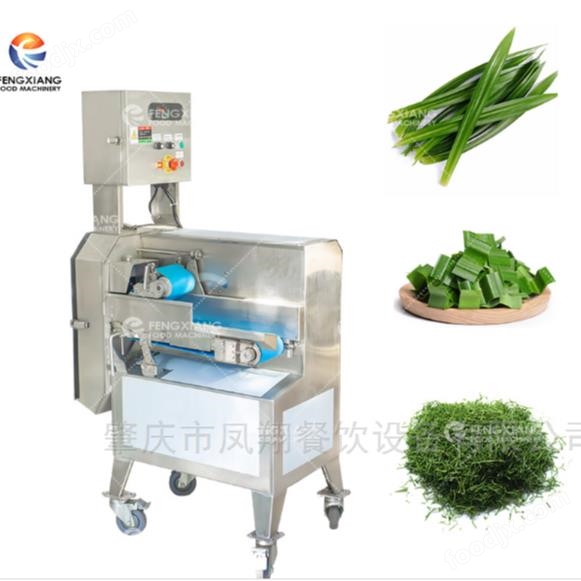
Potato, carrot, lettuce, diced and shredded conveyor belt is easy to disassemble. $r $nFC-301D is a multifunctional vegetable slicer with multiple functions and high output. The cutter and conveyor belt are easy to replace, operate, and clean. It is suitable for food processing plants, catering industries, canteens, catering distribution centers, etc.
Product Details
Potato, carrot, lettuce, diced and shredded conveyor belt for easy disassembly

Model:
FC-301D
Function:
The multifunctional dual head vegetable slicer has a dual withering frequency function. One end is used for cutting leafy vegetables such as scallions, garlic sprouts, chives, celery, cabbage, and other vegetables, while the other end is used for cutting ball and root vegetables such as radishes, potatoes, saffron, taro, bamboo shoots, onions, eggplants, apples, ginger, and more. Many fruits and vegetables can be sliced (thickness can be customized), shredded (thickness can be customized), cut into sections and strips (length can be adjusted), diced (size can be customized), etc
The conveyor belt speed and blade speed of leafy vegetables are controlled independently by two frequency converters.
One machine with multiple functions, powerful capabilities, high output, easy replacement of cutterhead and conveyor belt, simple operation, easy cleaning, suitable for food processing plants, catering industry, canteens, catering distribution centers, etc.
Cutting size:
Leafy vegetable cutting specifications: adjustable from 1 to 60mm
Root and stem slices: 2-12mm
Root and stem cutting: 2-12mm square silk
Basic cutting: 6mm, 8mm, 10mm, 12mm, 15mm
20mm, 25mm
Features:
1. Dual safety power-off protection setting
2. Casting process, integrated molding door cover
3. Upper conveyor belt spring with adjustable elasticity
4. The entire machine adopts Japanese made ball bearings
5. The upper conveyor belt adopts an aluminum alloy H-shaped skeleton
6. Integrated aluminum alloy bearing seat for Ye kitchen knife
7. Disassemble the upper and lower conveyor belts in just 3 seconds
8. Detachable blade
Potato, carrot, lettuce, diced and shredded conveyor belt for easy disassembly
Main parameters:
| Overall dimensions | voltage | Knife motor power | Conveyor belt power | Ball root motor power | Leaf knife material | aluminum alloy material | Blade holder material | weight |
| 1200*600*1370 | 220V single-phase | 750w three-phase | 0.4kw three-phase | 750 single-phase | SUS420 | Imported from the United States # 356 | SUS304 stainless steel | 135kg |
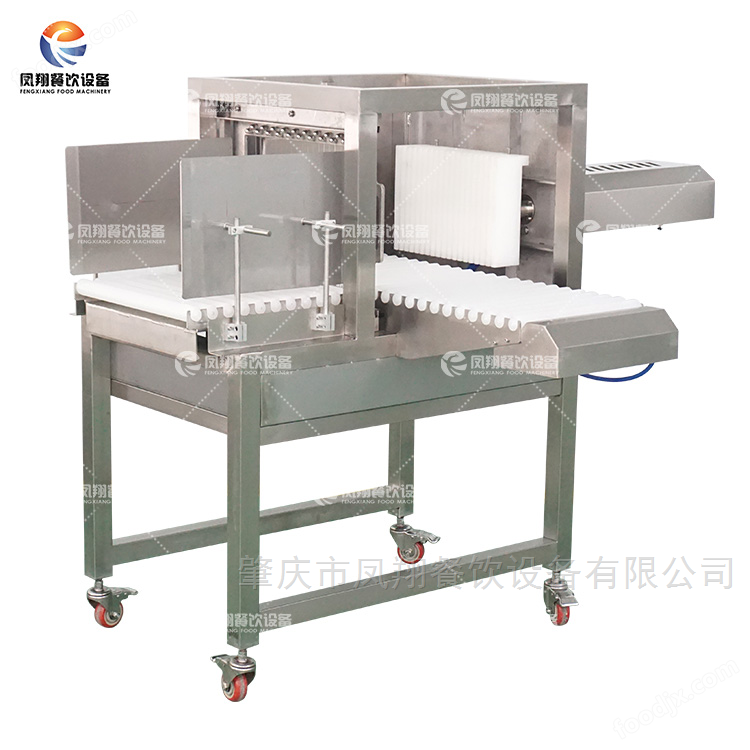
Real photos taken:

FC-301D detachable conveyor belt multifunctional double head vegetable cutter


Work situation:


FC-301D detachable conveyor belt multifunctional double head vegetable cutter cutting effect


The content of equipment maintenance is to keep the equipment clean, tidy, well lubricated, and safe to operate, including timely tightening of loose fasteners, adjusting the gaps between moving parts, etc. In short, it is the cross operation method of "cleaning, lubricating, fastening, adjusting, and anti-corrosion". Practice has proven that the lifespan of equipment is largely determined by the quality of maintenance and upkeep. Maintenance can be divided into daily maintenance, first level maintenance, second level maintenance, third level maintenance, etc. based on the workload and difficulty level.
Daily maintenance, also known as routine maintenance. The main content is to clean, lubricate, tighten parts that are prone to loosening, and check the integrity of parts and components. There are relatively few maintenance items and parts of this type, most of which are located outside the equipment.
First level maintenance mainly involves general tightening, cleaning, lubrication, tightening, and partial adjustments. Daily maintenance and first level maintenance are generally undertaken by operators.
Second level maintenance. The main content includes internal cleaning, lubrication, local disassembly inspection, and adjustment.
Third level maintenance. The main task is to disassemble, inspect, and adjust the main body of the equipment, and replace parts that have reached the specified wear limit if necessary. In addition, it is necessary to measure, identify, and record the wear of the main components. Secondary and tertiary maintenance are generally undertaken by dedicated maintenance workers with the participation of operators.
Similar Product Recommend