-
E-mail
lucas.lee@fxfoodmachine.com
-
Phone
19927065609
-
Address
1-2 Langqingxuan, Jingtai Road, Zhaoqing, Guangdong, China
Product Categories
Zhaoqing Fengxiang Catering Equipment Co., Ltd


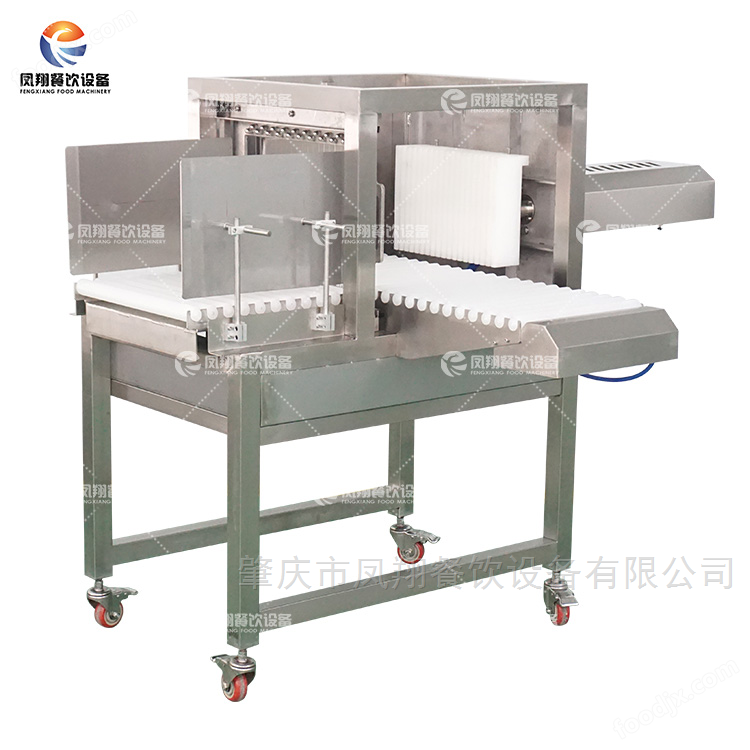
Fengxiang FQS-400 automatic fish skin removal machine, squid skin removal machine, fish and shrimp processing equipment
NegotiableUpdate on 01/06
- Model
- Nature of the Manufacturer
- Producers
- Product Category
- Place of Origin
Overview
Fengxiang FQS-400 automatic fish skin removal machine squid skin removal machine is specifically designed to remove various types of fish skin in order to process fish into products such as salmon. We have specially made pressure rollers to fix material cutting. High peeling rate, no material waste. The cutting thickness can be adjusted. It is a great helper for removing fish skin.
Product Details
Product Details
This machine is specifically designed to remove various types of fish skins in order to process fish into products such as salmon. We have specially made pressure rollers to fix material cutting. High peeling rate, no material waste. The cutting thickness can be adjusted. It is a great helper for removing fish skin.
Fengxiang FQS-400 Automatic Fish Peeling Machine Squid Peeling Machine

Product Parameters:
| Overall dimensions | 620*570*1100mm |
| Conveyor belt length | 700mm |
| power | 0.75kw |
| Power of roller motor | 200w |
| blade length | 400mm |
| Electric power connection | 380V/50Hz, 3Ph |
| weight | 98kg |
| output | 30-50pcs/min |
| speed | 280m/min |
Applicable features:
1. Widely used: It can process various types of fish, such as squid, tilapia, catfish, cod, fish, red fish, snapper, etc.
2. Better effect, clean and tidy materials.
3. Higher than manual peeling speed, adjustable cutting thickness.
4. The equipment is made of stainless steel material, with user-friendly design and easy cleaning.
Fengxiang FQS-400 Automatic Fish Peeling Machine Squid Peeling Machine
Product detail pictures:
The peeling thickness is adjustable, and the conveyor belt is easy to disassemble and clean:

Customized silicone pressure rollers can fix fish and have anti slip function:

Fish meat and skin are quickly separated and discharged from different outlets:

► Peeling finished product image:

The content of equipment maintenance is to keep the equipment clean, tidy, well lubricated, and safe to operate, including timely tightening of loose fasteners, adjusting the gaps between moving parts, etc. In short, it is the cross operation method of "cleaning, lubricating, fastening, adjusting, and anti-corrosion". Practice has proven that the lifespan of equipment is largely determined by the quality of maintenance and upkeep. Maintenance can be divided into daily maintenance, first level maintenance, second level maintenance, third level maintenance, etc. based on the workload and difficulty level.
Daily maintenance, also known as routine maintenance. The main content is to clean, lubricate, tighten parts that are prone to loosening, and check the integrity of parts and components. There are relatively few maintenance items and parts of this type, most of which are located outside the equipment.
First level maintenance mainly involves general tightening, cleaning, lubrication, tightening, and partial adjustments. Daily maintenance and first level maintenance are generally undertaken by operators.
Second level maintenance. The main content includes internal cleaning, lubrication, local disassembly inspection, and adjustment.
Third level maintenance. The main task is to disassemble, inspect, and adjust the main body of the equipment, and replace parts that have reached the specified wear limit if necessary. In addition, it is necessary to measure, identify, and record the wear of the main components. Secondary and tertiary maintenance are generally undertaken by dedicated maintenance workers with the participation of operators.
Similar Product Recommend