-
E-mail
17862668679@163.com
-
Phone
15762668679
-
Address
100 meters south of the high-speed railway community road in Mizhou Street, Zhucheng City
Product Categories
Zhucheng Dingcheng Machinery Co., Ltd


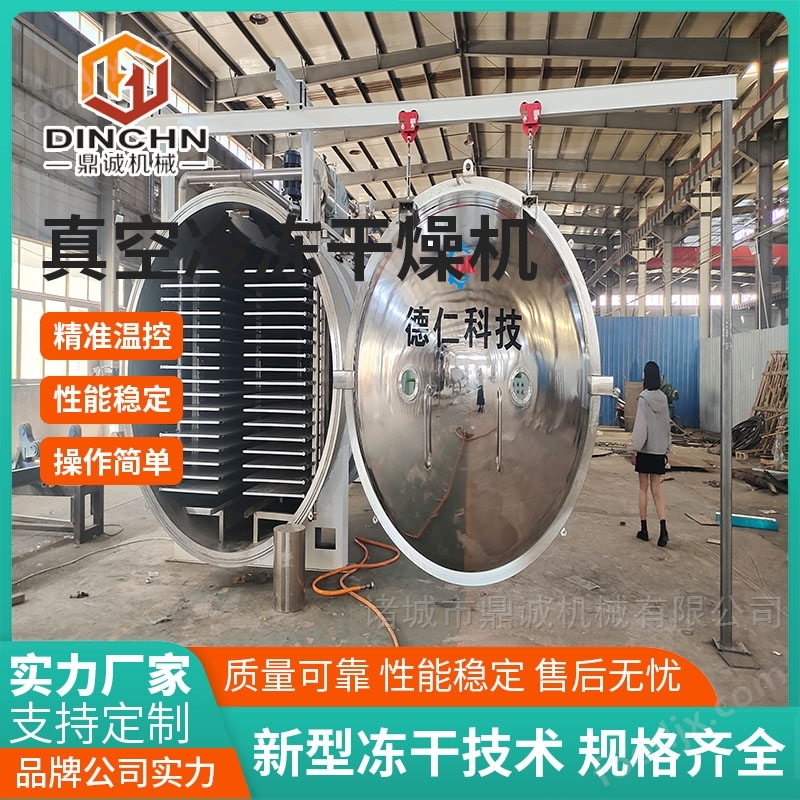
Vacuum freeze-drying machine for Chinese herbal medicine decoction pieces
NegotiableUpdate on 01/06
- Model
- Nature of the Manufacturer
- Producers
- Product Category
- Place of Origin
Overview
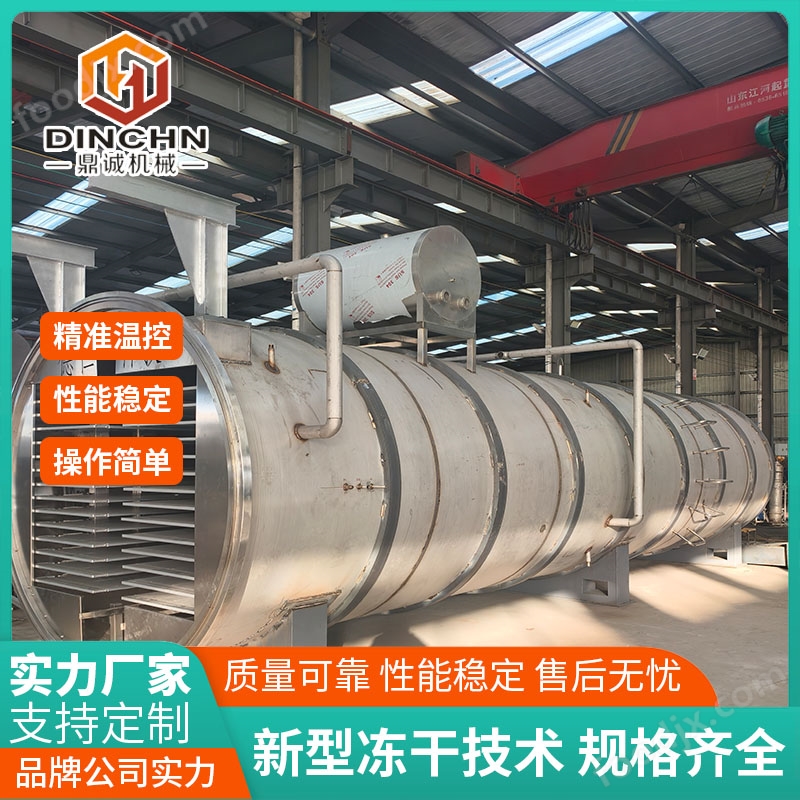
The vacuum freeze-drying machine for Chinese herbal medicine slices is applied in the production of Chinese herbal medicine slices, preserving the effective ingredients, color, and morphology of the herbs. Freeze drying chamber (box): a place for placing materials, resistant to vacuum and pressure, with multiple layers of heating plates (shelves) inside. $r $n refrigeration system: provides a low-temperature environment (cold trap) for pre freezing and capturing water vapor. $r $n vacuum system: including a vacuum pump group, used to establish and maintain the required vacuum degree
Product Details
Vacuum freeze-drying machine for Chinese herbal medicine decoction piecesApplied in the production of traditional Chinese medicine decoction pieces to preserve the effective ingredients, color, and form of the medicinal materials to the fullest extent possible.
Freeze drying chamber (box): a place where materials are placed, resistant to vacuum and pressure, with multiple layers of heating plates (shelves) inside.

Refrigeration system: provides a low-temperature environment (cold trap) for pre freezing and capturing water vapor.
Vacuum system: including a vacuum pump group, used to establish and maintain the required vacuum degree.
Heating system: Provides controllable sublimation heat and desorption heat.
Control system (PLC/touch screen): The core brain can set, record, and monitor the entire freeze-drying process curve (temperature, pressure, time).
Cold trap (water vapor condenser): captures the sublimated water vapor, allowing it to re solidify into ice and protect the vacuum pump.
Vacuum freeze-drying machine for Chinese herbal medicine decoction piecesWorking principle and process (three stages)
Pre freezing stage:
Quickly cool the material in the freeze-drying chamber to below the eutectic point (usually far below 0 ℃), allowing the internal moisture to solidify into solid ice crystals. This step determines the efficiency and product structure of subsequent sublimation.
One drying (sublimation drying) stage:
Slowly heat the material in a vacuum environment (usually several to tens of pascals) to provide sublimation heat.
Ice crystals sublime directly from the solid state to water vapor without passing through the liquid state.
This stage removes about 90-95% of the moisture and is the longest time-consuming stage.
Secondary drying (analytical drying) stage:
Further increase the temperature (but usually at a safe temperature, such as 30-50 ℃), and under high vacuum, desorb and remove the remaining moisture (about 5-10%) that is more tightly bound to the material molecules.
After reaching the target moisture content (usually ≤ 5%), break the vacuum and remove the product.

Similar Product Recommend