-
E-mail
1334660976@qq.com
-
Phone
17667426777
-
Address
Jianqiao Road
Product Categories
Zhucheng Haokai Machinery Co., Ltd


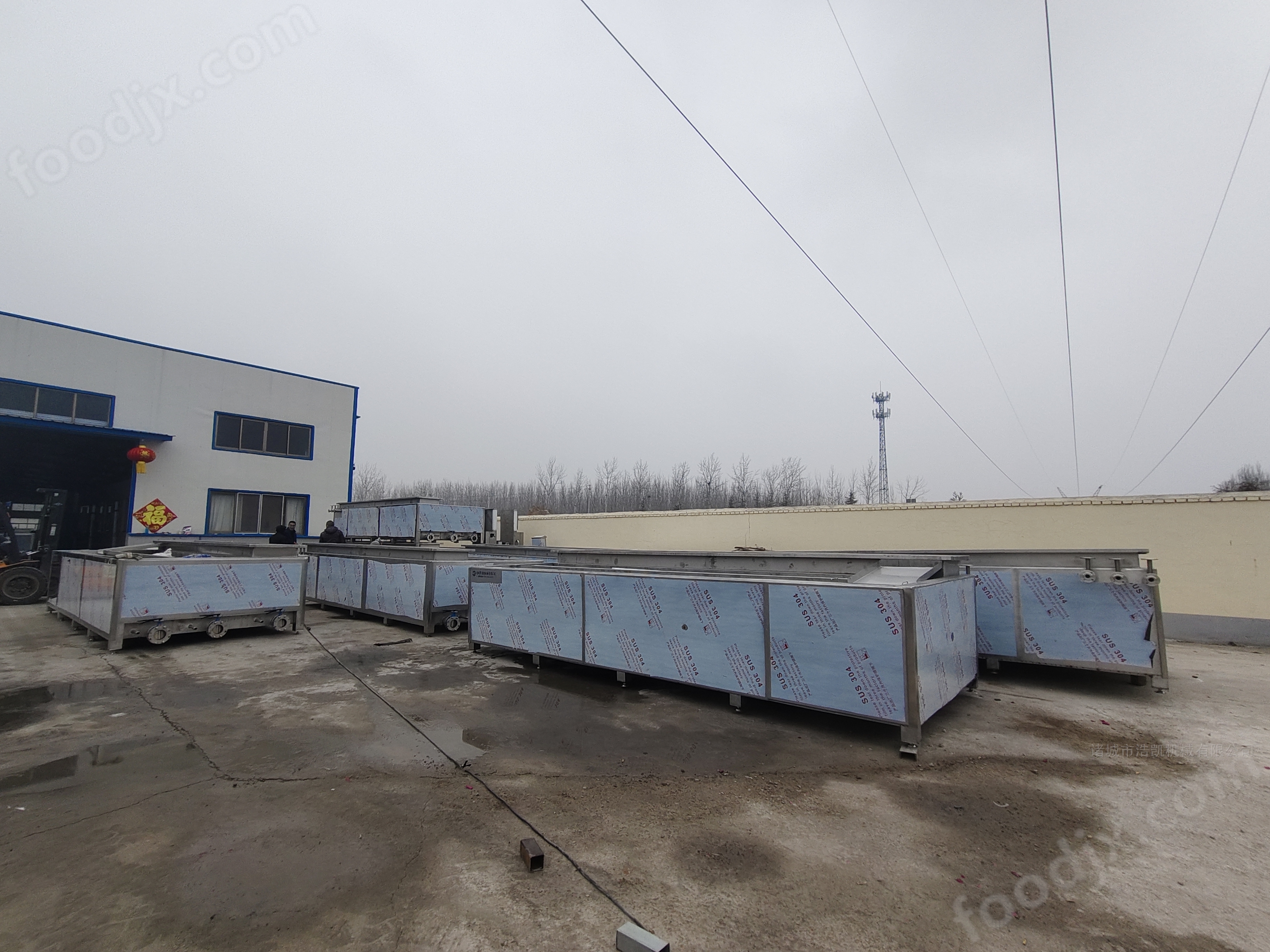
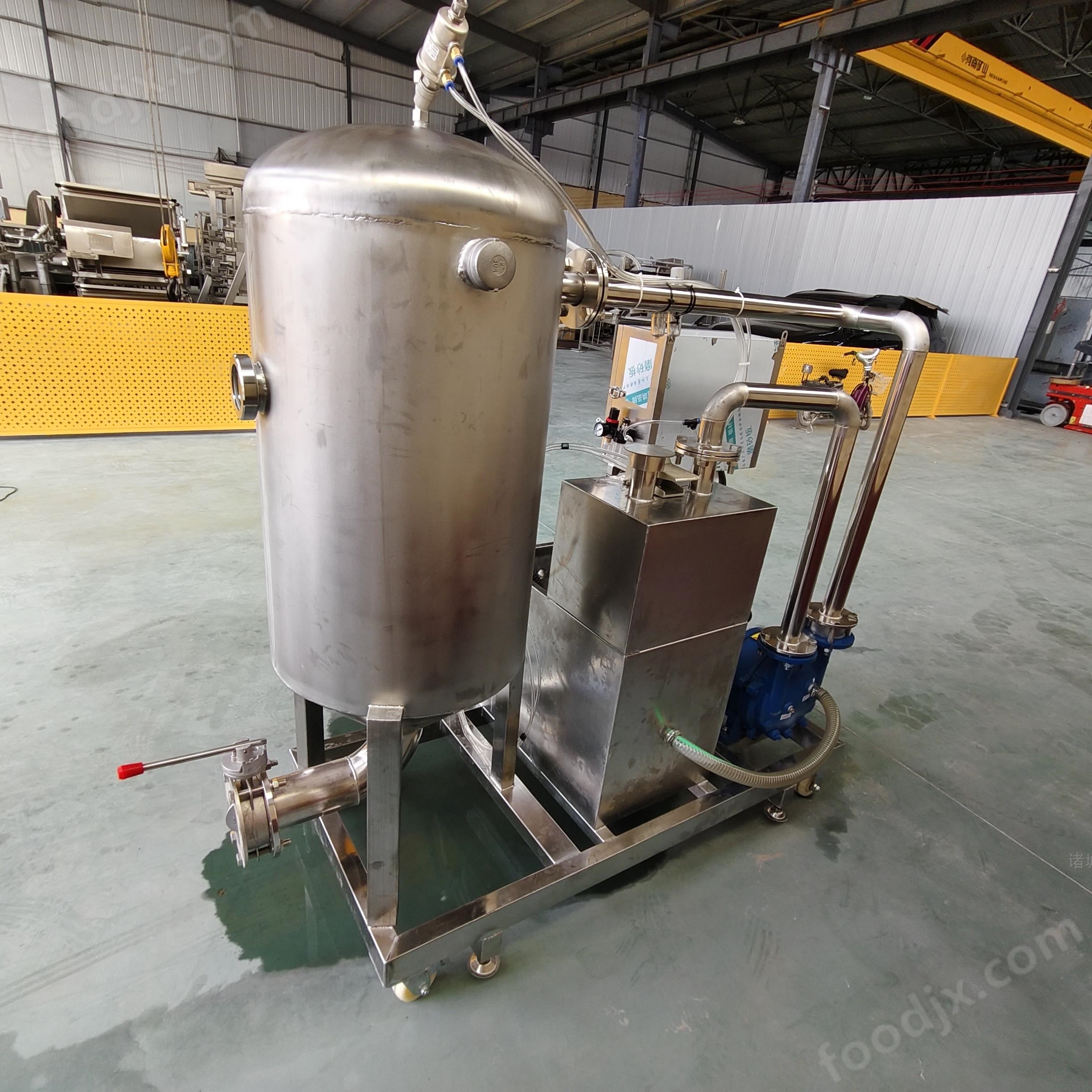
Stainless steel duck dipping wax equipment Haokai mechanical dipping machine
NegotiableUpdate on 02/23
- Model
- Nature of the Manufacturer
- Producers
- Product Category
- Place of Origin
Overview
After soaking and bursting the feathers of waterfowl such as ducks and geese, due to the large amount of residual fluff, they need to be treated with wax soaking, cold wax, and dewaxing. After dewaxing, the feather purity rate of ducks and geese can reach over 95%. Production lines with a capacity of over 3000 birds/hour usually use mechanical waxing, while production lines with a capacity of less than 3000 birds/hour usually use manual waxing.
Product Details
1. Chicken, duck, and goose slaughtering assembly line process:
Hanging of hairy chicken → Water bath hemp electricity → Assassination → Bleeding → Scalding → Hair removal → Manual cleaning of small hair → Chicken hair water is washed into the chicken hair cleaning room → Claw cutting → Rotation hanging → Ripping → Removal of internal organs → Head cutting → Body cleaning → Pre cooling → Body draining → Internal organs are processed in the internal organ processing room → Body hanging → Segmentation → Sorting → Sorting → Sorting, Weighing, Packaging → Quick freezing → Packing → Refrigeration → Sales
2. Main Process Description
1. Pre slaughter inspection
Pre slaughter inspection includes pre unloading inspection and post unloading inspection of poultry. Before unloading, the inspector checks the number of poultry according to the "Animal Quarantine Certificate" to understand the situation of illness and death during the process, and focuses on observing whether there are any poultry with mental fatigue, loose fur, slow movements, abnormal appearance, or poor appetite. After verifying that everything is normal, unload the poultry and store it in the designated location. Poultry with suspicious behavior after unloading should be immediately removed for individual inspection.
2. To be slaughtered
Poultry that have been fasted and without water should be transported in batches to the live poultry reception area in the waiting slaughter workshop, and the live poultry should be hung on the hanging conveyor line.
3. Causing dizziness
The poultry that have been hung up are transported by the hanging conveyor line to the dizzying area. At present, there are two main methods for inducing dizziness: carbon dioxide gas anesthesia and water bath electric corona. Carbon dioxide gas anesthesia is currently the most advanced method for inducing dizziness, but due to its relatively high cost and some adverse effects on the quality and color of meat products, it is not as commonly used as water bath electric corona. Water bath electricity time: The working voltage should not exceed 110 volts, and the time for birds to pass through the corona tank during corona discharge should be appropriate, so that they can automatically wake up within 60 seconds after corona discharge.
4. Assassination and bloodletting
Assassination and bloodletting are performed on poultry that have fainted. Artificially bloodletting is generally used, and there are usually three methods: oral bloodletting, cervical bloodletting (cutting off the trachea, esophagus, and blood vessels with a knife), and arterial bloodletting. Before entering the soaking equipment after bloodletting, the respiration of poultry should be stopped to prevent the sewage in the soaking equipment from being sucked into the lungs of the poultry and contaminating the tunnel. The bleeding time for chickens is generally 2-3 minutes, and for ducks and geese it is 3-4 minutes. The bleeding time in winter should be extended by 5-10 seconds compared to summer.
5. Soaking and bursting feathers
After slaughtering and bleeding poultry, it is necessary to immediately soak and steam the feathers, which is the core process of the poultry slaughtering and processing production line. Due to the waterproof properties of the outer feathers of waterfowl such as ducks and geese, they need to be soaked with high-pressure spray before being scalded. The soaking and scalding temperature for general chickens is 58-62 ℃ for 45-90 seconds, while the scalding temperature for ducks and geese is 61-63 ℃ for 150-210 seconds. After the scalding is not completed, the poultry body is transported by a hanging conveyor to the molting machine for molting. When molting, 40 ℃ warm water should be sprayed on the poultry toilet body. The molting machine should be adjusted according to the type and individual size of the slaughter batch.
6. Immersion wax, cold wax, and dewaxing
After soaking and bursting the feathers of waterfowl such as ducks and geese, due to the large amount of residual fluff, they need to be treated with wax soaking, cold wax, and dewaxing. After dewaxing, the feather purity rate of ducks and geese can reach over 95%. Production lines with a capacity of over 3000 birds/hour usually use mechanical waxing, while production lines with a capacity of less than 3000 birds/hour usually use manual waxing.
7. Clean hair
After shedding feathers, there are still small hairs and vascular hairs left on the bird's body, and a manual hair removal process must be carried out again. Due to the high manual labor and water consumption in this area, it is necessary to design a ventilation system and ensure smooth drainage and sufficient lighting.
8. Remove internal organs
There are two main methods for visceral extraction: automatic combined action device and manual assisted assembly line production.
The automatic joint operation device uses a robotic arm to complete the anal cutting, opening, and chamber cleaning processes, achieving automated processing. This not only improves the processing capacity of the production line, ensures stable meat processing quality, but also greatly reduces the labor intensity of workers. However, this equipment requires a high degree of uniformity in the body shape of poultry, and most domestic farms find it difficult to provide live poultry suitable for automatic joint operation devices. Therefore, manual assisted assembly line production methods are commonly used in China.
9. Pre cooling
After cleaning the chamber, the toilet body enters pre cooling. Pre cooling is the process of placing the cleaned chest in a low temperature environment of 0-4 ℃ for a certain period of time to lower the body temperature to below 7 ℃, ensuring the quality of the product during later processing and freezing.
Water cooling is the process of pre cooling the body by placing it in cold water. There are mainly two types of processing equipment: hanging and spiral. Water cooling improves the water loss defect of the body in the air cooling process, but due to its larger water consumption compared to other methods, it has poor energy efficiency. Meanwhile, due to the prolonged soaking time of the cave in water, it can have a negative impact on the quality of meat products. Hanging water bath cooling is more suitable for small and medium-sized poultry slaughter production lines with a processing capacity of less than 3000 pieces per hour. This method is safe and reliable, ensuring that the center temperature of the drama is reduced to below 7 ℃ within the predetermined pre cooling time. But the disadvantage is that it occupies a large area and requires a high amount of disposable water Not suitable for high productivity slaughter production lines. The spiral pre cooler has a small footprint and moderate water consumption
Similar Product Recommend