-
E-mail
17862668679@163.com
-
Phone
15762668679
-
Address
100 meters south of the high-speed railway community road in Mizhou Street, Zhucheng City
Product Categories
Zhucheng Dingcheng Machinery Co., Ltd


Freeze vacuum dryer
NegotiableUpdate on 01/06
- Model
- Nature of the Manufacturer
- Producers
- Product Category
- Place of Origin
Overview
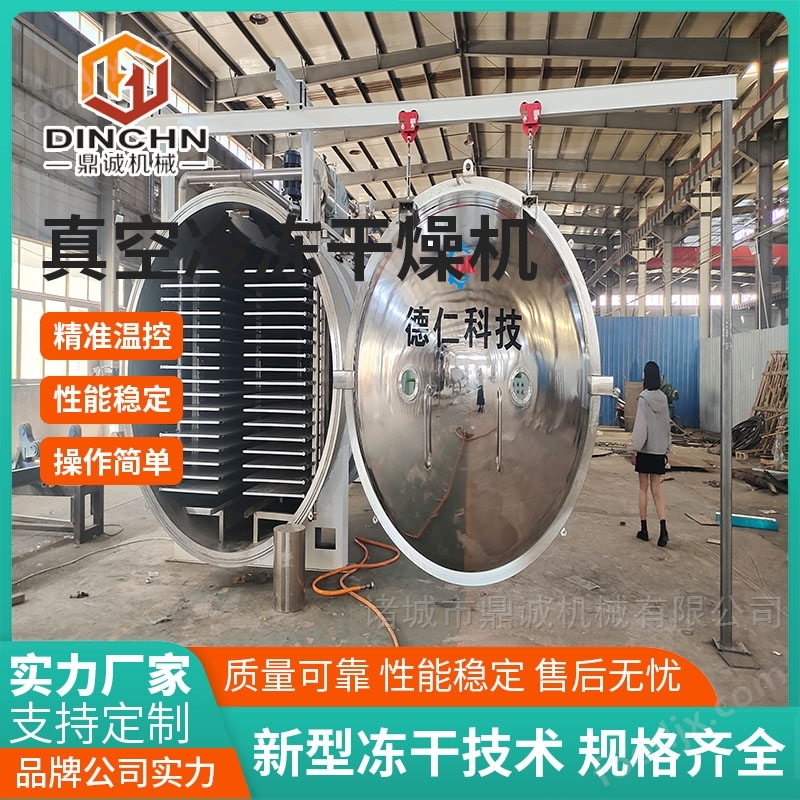
Freeze vacuum dryer is suitable for drying high-end raw materials such as pharmaceuticals, traditional Chinese medicine decoction pieces, biological and wild vegetables, dehydrated vegetables, food, fruits, chemicals, pharmaceutical intermediates, etc. Freeze vacuum drying is a new type of box structure developed by combining the refrigeration system, vacuum system, thermal oil heating system, and dehumidification system in a vacuum freeze dryer, which greatly utilizes the storage space inside the box for freeze-drying.
Product Details
Freeze vacuum dryerSuitable for drying high-end raw materials, traditional Chinese medicine decoction pieces, biological, wild vegetables, dehydrated vegetables, food, fruits, chemicals, pharmaceutical intermediates and other materials. Freeze vacuum drying is a new type of box structure developed by combining the refrigeration system, vacuum system, thermal oil heating system, and dehumidification system in a vacuum freeze dryer, which greatly utilizes the storage space inside the box for freeze-drying.

Freeze vacuum dryerIt refers to the process of removing water or other solvents from frozen biological products through sublimation. Sublimation refers to the process in which a solvent, such as water, like dry ice, changes from a solid state to a gaseous state without going through a liquid state. The product obtained from freeze-drying is called lyophilizer, and the process is called freeze-drying. Traditional drying can cause material shrinkage and damage cells. The structure of the sample will not be damaged during the freeze-drying process, as the solid components are supported by the solid ice in their positions. When ice sublimates, it leaves pores in the remaining dry material. This preserves the integrity of the biological and chemical structure and activity of the product. In the laboratory, freeze-drying has many different uses, including in many biochemical and pharmaceutical applications. It is used to obtain biomaterials that can be preserved for a long period of time, such as microbial culture, enzymes, blood, and drugs. In addition to the stability of long-term preservation, it also retains its inherent biological activity and structure. For this purpose, freeze-drying is used to prepare tissue samples for structural studies (such as electron microscopy). Freeze drying is also used in chemical analysis, which can obtain dried samples or concentrate samples to increase analysis sensitivity. Freeze drying stabilizes the composition of the sample without changing its chemical composition, making it an ideal analytical aid. Freeze drying can occur naturally. Under natural circumstances, this process is slow and unpredictable. Through freeze-drying systems, people have improved and subdivided many steps, accelerating this process.

A cold trap is a device used in the freeze-drying process to capture water. In theory, the lower the temperature of the cold trap, the stronger its water capturing ability. However, a low temperature of the cold trap requires high refrigeration requirements, resulting in high machine and operating costs. The cold trap temperature of the experimental series freeze dryer mainly includes several levels such as -45 ℃, -60 ℃, and -80 ℃. Freeze drying with a cold trap temperature of -45 ℃ is suitable for some products that are easily freeze-dried, freeze drying machines with a cold trap temperature of around -60 ℃ are suitable for freeze-drying most products, and freeze drying with a cold trap temperature of -80 ℃ is suitable for freeze-drying some special products. The experiment on the effect of cold trap temperature on water capture capacity shows that when the cold trap temperature decreases from -35 ℃ to -55 ℃, the water capture capacity is significantly improved. When the cold trap temperature is below -55 ℃, the water capture capacity of the cold trap is not significantly improved. Therefore, in the absence of special requirements, choosing a cold trap temperature of around -60 ℃ is an ideal choice.

It can be used for drying fruits and vegetables, meat and poultry, aquatic products, seasonings, convenience foods, and famous specialty products. It can achieve the purpose of maintaining the original color, aroma, taste, shape, and freshness of the food, and has good rehydration properties. The finished product is easy to store and transport, with reduced costs and extended shelf life.

Similar Product Recommend