-
E-mail
lanzhouyuhua@163.com
-
Phone
13893289740
-
Address
First Floor, Tianyuanjia Building, 143-151 East Railway Station Road, Lanzhou City, Gansu Province
Product Categories
Lanzhou Yuhua Food Packaging Refrigeration Equipment Co., Ltd
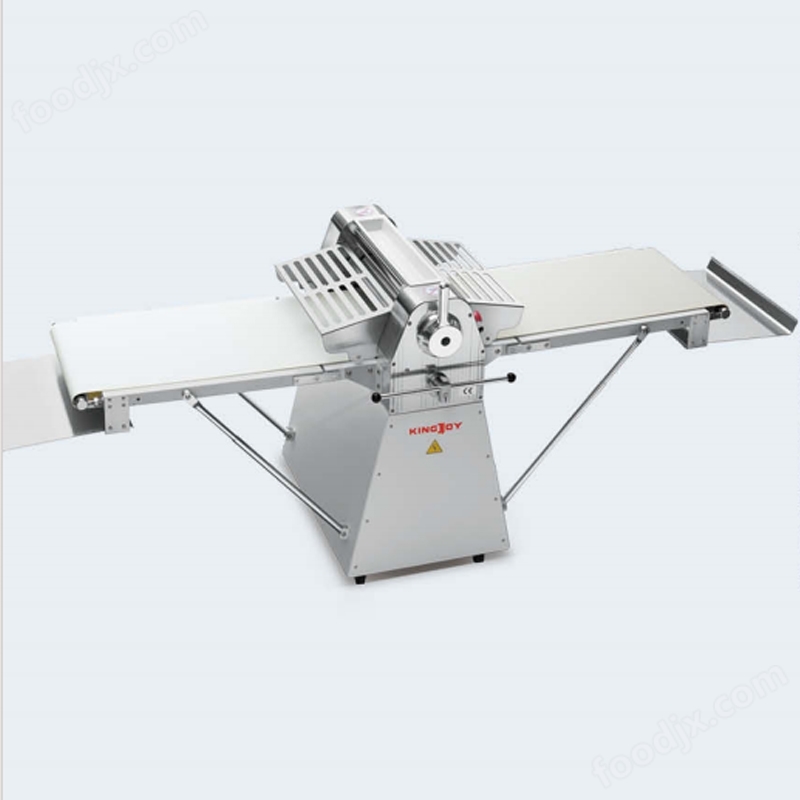
520 puff pastry machine
NegotiableUpdate on 01/06
- Model
- Nature of the Manufacturer
- Producers
- Product Category
- Place of Origin
Overview
A puff pastry machine is a specialized equipment used in the baking field to make puff pastry products such as egg tarts, croissants, and Napoleon cakes. The core of the machine operates through a mechanical process of "pressing and folding" to layer and fuse dough with butter, forming a uniform puff layer structure, replacing manual labor to achieve standardized and efficient puff pastry processing. Here is a detailed introduction:
Product Details
A puff pastry machine is a specialized equipment used in the baking field to make puff pastry products such as egg tarts, croissants, and Napoleon cakes. The core of the machine operates through a mechanical process of "pressing and folding" to layer and fuse dough with butter, forming a uniform puff layer structure, replacing manual labor to achieve standardized and efficient puff pastry processing. Here is a detailed introduction:
core functionality
Precise dough pressing control: equipped with an upper and lower double roller pressing system, the roller spacing can be accurately adjusted (usually adjustable from 0-20mm), which can gradually press the dough from thick slices to thin and uniform dough (the thinnest can be pressed to 1mm), and the dough is not easy to heat up during the pressing process, avoiding butter melting and causing the pastry layer to fail. Some models come with an "automatic rewinding function" that can repeatedly press the dough to enhance its extensibility, making it suitable for making tough puff pastry with high gluten flour.
Efficient folding and shaping: Supports classic pastry lifting techniques such as "three fold" and "four fold". Some commercial models come with automatic folding devices that can automatically fold the pressed dough according to a set number of times, forming a pastry layer structure of dozens or even hundreds of layers (such as cow horn buns requiring over 1000 layers of pastry), avoiding the breakage of pastry layers caused by uneven manual folding force.
Temperature and speed adjustment: Some models come with a "roller temperature control" function (usually controlled at 15-20 ℃), which matches the freezing point of butter to prevent butter from melting during pressing; Supports multiple pressing speeds (0-5m/min), with low-speed adaptation for initial pressing (to avoid dough breakage) and high-speed adaptation for mass production, improving efficiency.
Structure and Material
Material: The pressure roller is mostly made of food grade stainless steel, with a smooth and wear-resistant surface to avoid skin adhesion; The body frame is made of cold-rolled steel plate (surface sprayed with plastic), which is corrosion-resistant and stable; The parts that come into contact with dough on some models are made of food grade nylon, which combines toughness and safety, and meets baking hygiene standards.
Humanized structure: The body is equipped with an emergency stop button, which can immediately cut off power in case of emergencies; Some household models are compact in size (width ≤ 50cm), making them easy to store; Most commercial models have a vertical design, paired with a workbench for easy retrieval and placement of dough; Some models come with a "dust cover" to prevent dust from contaminating the surface during the pressing process.