-
E-mail
td1958@td1958.com
- Phone
-
Address
No. 358 Dayuan Road, Laizhou City, Shandong Province
Product Categories
- Ring spun steel wire ring
- Leather testing equipment
- Auxiliary testing equipment
- Medical protective clothing mask testing instrument
- Box pot cover plate furnace
- Other testing instruments
- Dyeing and Finishing Testing Instruments
- Yarn testing instrument
- Fabric testing instrument
- Powerful testing instrument
Laizhou Electronic Instrument Co., Ltd

LLY-60A acid resistant permeability tester
NegotiableUpdate on 04/21
- Model
- Nature of the Manufacturer
- Producers
- Product Category
- Place of Origin
Overview
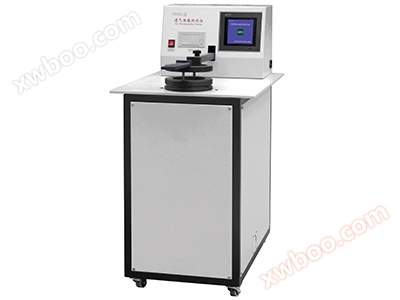
LLY-60A acid resistant permeability tester
Product Details
1、 Main purpose
This instrument is used to determine the acid alkali penetration/penetration resistance of acid resistant workwear. Due to the fact that there are two types of materials used to make acid resistant clothing: fabric and non-woven, conductive methods are used to test the permeability of fabric protective clothing, while indicator or concentration methods are used to test the permeability of non-woven protective clothing. Represented by penetration and penetration time t.
Applicable standard: Appendix A of GB 24540-2009 "Protective Clothing for Acid and Alkali Chemicals"
2、 Working principle
Using conductivity method and automatic timing device to test the penetration time of fabric acid alkali chemical protective clothing. The sample is placed between the upper and lower plates, and the conductive wire is connected to the upper plate while in contact with the upper surface of the sample. When penetration occurs, the circuit conducts and the timing stops.
3、 Main technical indicators
1. Sample size: 100mm × 100mm;
2. Timing range: 0-9999s;
3. Test solution capacity: 0.1mL
4. Test conditions: Temperature: 17-30 ℃ Relative humidity: 65% ± 5%;
5. Power Supply Voltage: AC 220V Power: Approximately 20W.
4、 Instrument composition
The electrical part of the instrument consists of a digital timer, acid-base conductivity detector, timing indicator light, buzzer, and control switch circuit. The conductivity test section consists of upper and lower electrode test plates, etc. The instrument structure is reasonable and easy to use.

5、 Operation method
*Prepare the test solution: 80% sulfuric acid, 40% nitric acid, 30% hydrochloric acid, and 30% sodium hydroxide.
*Take 6 samples of 100mm × 100mm from the acid proof suit for each test solution, including 3 seamless samples and 3 seamless samples. The joint on the jointed specimen should be located at the center of the specimen.
*Wash the sample according to Appendix A, A.5.2 of the standard.
*Turn on the power of the control box, and the startup interface will be displayed as shown in the figure:

*Then press any key to enter the testing interface.

*Lay the sample flat in the middle of the upper and lower electrode plates, and press the two conductive needles with a difference of about 1mm on the surface of the sample. Press the "Start" button to enter the preparation interface:

*Drip 0.1mL of the test solution onto the surface of the sample along the conductive needle. After dripping the test solution, the instrument will automatically start timing. When the acid solution penetrates the sample and conducts electricity, the buzzer will sound and the timer will automatically stop timing. Automatically record the value of timer t. Test completion interface:

Note: There is a "■" between the conductivity method and the stop of the LCD screen. If there is one "■" or two "■ ■", the next test cannot be conducted.
*The experiment has ended. If there are any objections to the results of this experiment, you can press the "delete" button to cancel the experiment.
*Remove the sample and wipe the test solution off the electrode.
*Perform three tests on each test solution according to the above steps, and the instrument will automatically record t1, t2, and t3.
*Press the "Average" button to display the average value of three experiments: T=(t1+t2+t3)/3. (It is necessary to distinguish between jointed and seamless specimens)

*Up to 9 experiments can be conducted, and the average value of 9 experiments can be calculated.
*Press the 'Search' button to display the previous experiment records in rotation.

*After the experiment is completed, turn off the power and clean the instrument thoroughly.
Note: If there are any errors in the data of this instrument, please raise them in a timely manner. If there are any changes, we will not notify you. Please forgive us!