-
E-mail
874625580@qq.com
-
Phone
15105368366
-
Address
Zhucheng City, Shandong Province
Product Categories
Zhucheng Guantong Machinery Co., Ltd


Guantong Pickled vegetables sterilizer complete Pickled vegetables production line
NegotiableUpdate on 01/06
- Model
- Nature of the Manufacturer
- Producers
- Product Category
- Place of Origin
Overview
Guantong Pickled vegetables sterilizer whole set of Pickled vegetables production line is a multi-step assembly line process, which usually includes the main links of cleaning, cutting, pickling, desalting, pressing, mixing, packaging, sterilization, cooling, draining, air drying, and each link is completed by corresponding professional equipment.
Product Details
Guantong Pickled vegetables sterilizer complete Pickled vegetables production lineMain production processes and equipment:
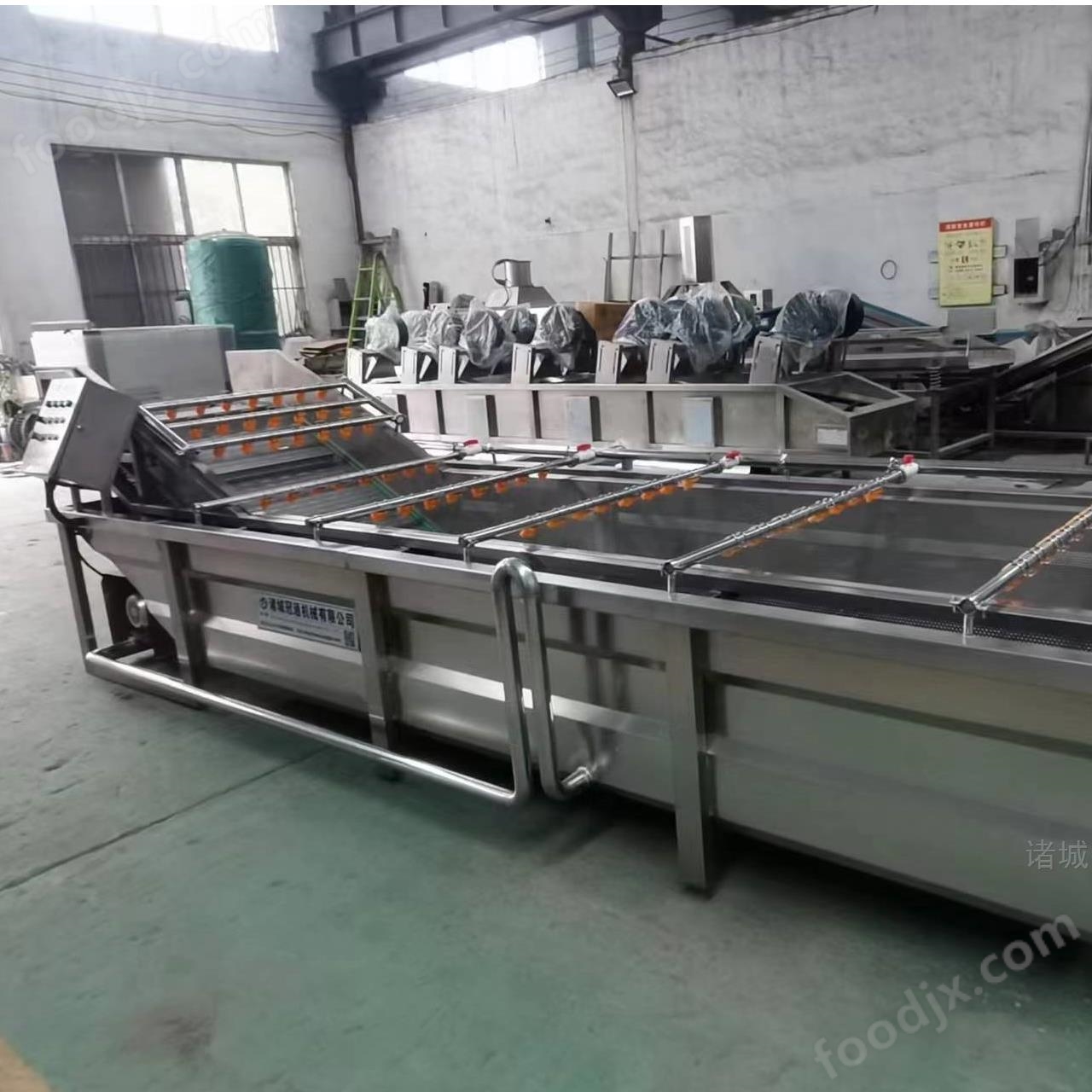
Cleaning and cuttingFirstly, it is necessary to select and clean the raw vegetables. Common equipment includesbubble washing machineOrBrush roller cleaning machine. After cleaning, useDouble head vegetable slicerCut vegetables into shreds, chunks, slices, and other treatments.
Marination and desalinationThe sliced vegetables enter the pickling stage, which may then require desalination treatment. This step is usually carried out byDesalination machineOrbubble washing machineCompleted.
Squeezing and mixing materialsVegetables that have been pickled and desalinated will pass throughjuicerDehydrate and then enterMixing machineAdd seasoning and stir evenly.
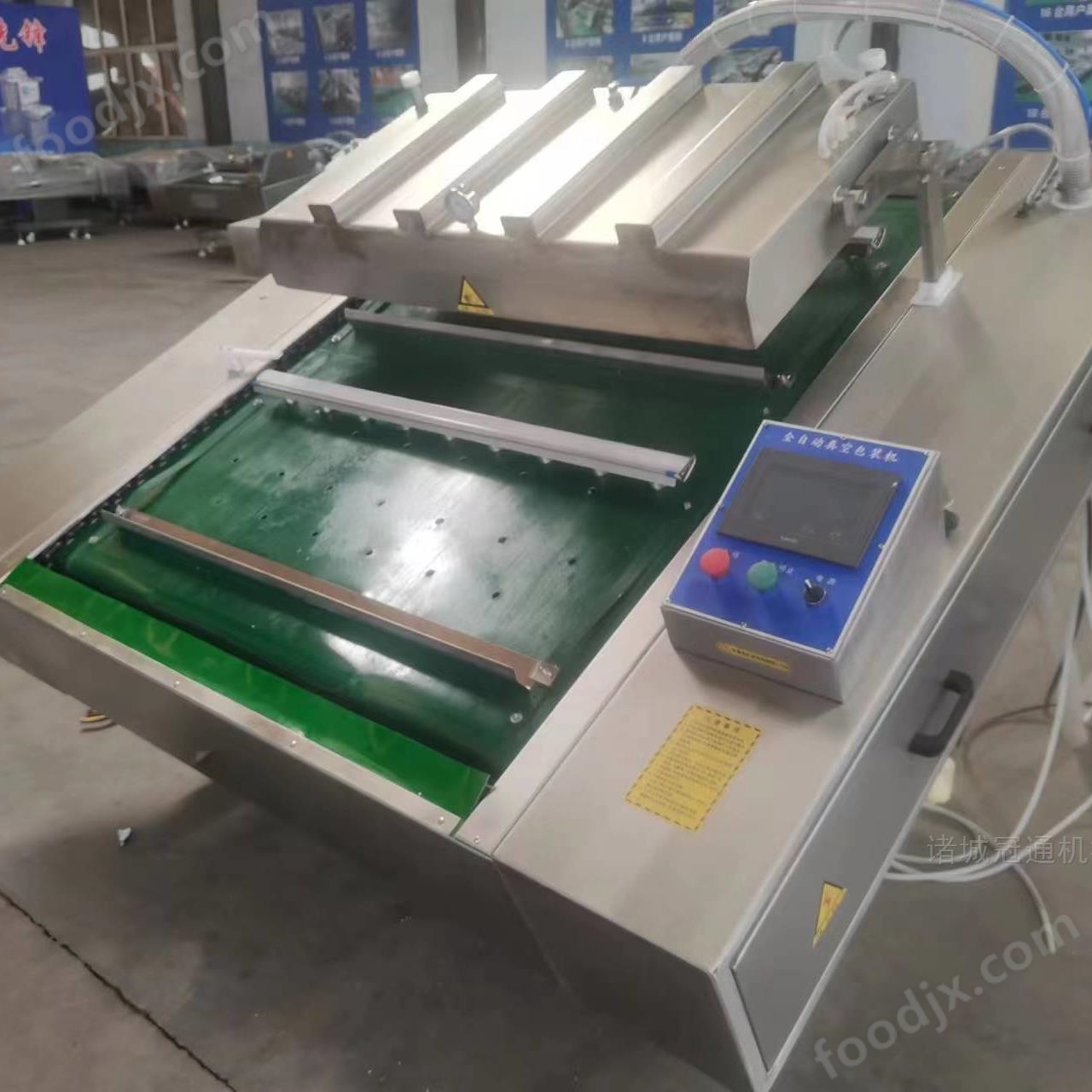
Packaging and sterilization: Pickled vegetables after mixing will bevacuum packagingAnd then throughPasteurizerPerform sterilization treatment to ensure food safety and extend shelf life.
Cooling and air dryingThe sterilized product needs to be cooled and passed throughair dryerRemove moisture from the packaging surface for subsequent labeling and packaging.
Guantong Pickled vegetables sterilizer complete Pickled vegetables production lineAdvantage:
Significant improvement in production efficiency
Automated production lines have transformed traditional manual production into efficient and standardized industrial production, significantly increasing production capacity. For example, an efficient Pickled vegetables processing line can process thousands of kilograms of raw materials per hour, while the traditional manual method can only process hundreds of kilograms.
Stable and controllable product quality
The assembly line ensures the consistency of product flavor and taste by precisely controlling process parameters such as cleaning time, pickling time, temperature, and salinity, ensuring the safety and hygiene of the products.
Reduce labor costs
Fully automated production requires almost no manual intervention from raw material input to finished product output, reducing labor costs.
Meet diverse market demands
By adjusting the process parameters and formula, the production line can produce Pickled vegetables with different tastes and flavors to meet the needs of families, catering, cultural tourism and other scenarios.
Energy saving and environmental protection comply with standards
The assembly line adopts advanced energy-saving technology and environmentally friendly materials to reduce energy consumption and waste emissions, in line with the concept of green production. At the same time, the driving role of policies on industry development is becoming increasingly significant, and the country“
The 14th Five Year Plan incorporates the food industry into the field of cultural heritage and innovation.
These advantages together promote the transformation of Pickled vegetables industry from family workshop production to modern industry integrating industrialization, intelligence and branding.
Similar Product Recommend